Six Facts About School Speech Services You Need to Know

May is Better Hearing and Speech Month. All month, organizations like E-Therapy are working to raise awareness about our students’ communication disorders and virtual speech therapy treatments available during their time away from school due to Covid-19.

The continued disruption of school is causing concern among parents worried that their children will not continue to receive speech and language services. Here are six things that parents need to know:

1. Children are still entitled to a free and appropriate public education

Guidance from the DOE states that school districts must provide a free and appropriate public education (FAPE) to students with disabilities. Educators can use distance learning to serve all students, and special education and related services can be provided via computer, internet, or phone. E-Therapy is a pioneer in providing teletherapy services to school throughout the United States. If your district does not have a HIPAA compliant online therapy platform for their on-site therapists, they need to look at a service provider like E-Therapy.

2. Your child may be able to receive virtual speech therapy during school closures

Teletherapy is a way to deliver speech and language therapy online, and many school districts had a system in place before schools closed. Others have added in a video conferencing model because of the pandemic. If your child is not receiving services or if your school is using free teleconferencing tech that was built for business, then point your local district toward E-Therapy.

3. Privacy laws still apply to your child

HIPAA and FERPA laws are still in effect, so that your child’s personal health and educational records cannot be shared without parental consent. Enforcement of compliance could be relaxed though because we are in a state of emergency.

4. Children who regress can rebound!

ASHA states, “Amidst current circumstances, children with speech and language disorders are at a greater risk of regressing educationally than other students. However, students can regain ground; in most cases, a child’s regression will not be permanent.” This is good news, but it might not be of use to you now.

Schools are required to provide services such as speech therapy, physical and occupational therapy, and mental health services, as well as diagnostics, evaluations, and IEPs. For students in virtual learning settings, therapy can be done online. Teletherapy companies like E-Therapy provide all these services or license our STAR Teletherapy Platform for school-based staff to use.

5. Don’t beat yourself up. You are doing your best.

These are weird times, and you are under a lot of pressure. With all the responsibilities you have, SLPs at your child’s school know that you are doing your best to balance everything. Self-care and wellness may be buzz words that you are tired of hearing, but the pressure is real. It can become debilitating if you don’t address it. Our resident life coach, Cathy H, wrote a piece called Ten Tips to Keep You From Falling Apart This School Year. Try to follow dome of those tips to help with your sanity.

We really are in this together.

6. Your SLP is a rockstar, too

School-based SLPS weren’t set up for teletherapy, so it has been a learning curve for them, too. They have lots of the same responsibilities at home as their student’s parents, but they are determined and dedicated to serve their students. It’s a true partnership no matter where the learning takes place.

Follow E-Therapy for Activities and Resources

Follow E-Therapy on Facebook to get activities you can use with your child. Our teletherapists share new ones every week, and we will continue throughout the summer! Click below to Like Us! Thanks!

Source

Personifying Emotions and Body-Based Regulation Techniques

The following is an excerpt from The Big Picture Therapy, a blog run by on of E-Therapy’s professional Occupational Therapist (OT), Jasmine Erazmus.

With the feeling of trauma and tension and recent shootings, it seems like a good time to share a therapy tip I have for working on emotional regulation and anxietyAs of late my own anxiety has increased. For many kids, quarantine and other changes have already put them on edge and any extra stressor seems to be amplified.

One therapy tip I have for you today: 

Give anxiety a silly personality by personifying emotions

(optional with poorly done accents)

One of my clients with panic attacks has been working on things such as coordination and emotional regulation. He did not like the Superflex Program. I use this program with many kids as a great fun way to talk about certain behaviors typical of kids with sensory processing disorder. The cartoon characters have been a great assist for many kids and families to address inappropriate behaviors. 

This client thought those characters were “creepy.” Ok, not every program is for every kid. 

A few months back, we were in a session, and I imitated his anxiety with a heavy (poorly done) Eastern European accent. He LOVED it and kept requesting I do the voice. Soon he was making impressions with me.

I had him name his it. He named it “Gerald” after a character in a book series he was reading. I said things like. “I’m Gerald, and I LOVE to make you worried.”

Powerful body-based techniques

Eventually we were lightly tapping along certain points on the body inspired by the Emotional Freedom Technique (EFT) and making our own affirmations.

Our affirmations while tapping sounded like:

“Even though Gerald is very convincing I don’t have to listen to him”

“Even though I am worried, I can remember to take deep breaths

“Even though I am worried I love myself.”

He liked to add, “and I know Jesus loves me”, as he has a religious background. I thought that was endearing.

Integrating body-based techniques to any emotional regulation work is such powerful stuff. I have been working his reflexes as well, and the results have been amazing.

The other day my client proudly told me of a time he defeated “Gerald!” He also listed ways he could defeat him such as by taking deep breaths or asking for a sensory tool. He was proud to tell me that he participated in all but one of his physical education exercises. His anxiety episodes have also significantly decreased. 

Last session he made a character called “Sick Man” that makes him feel physically sick. 

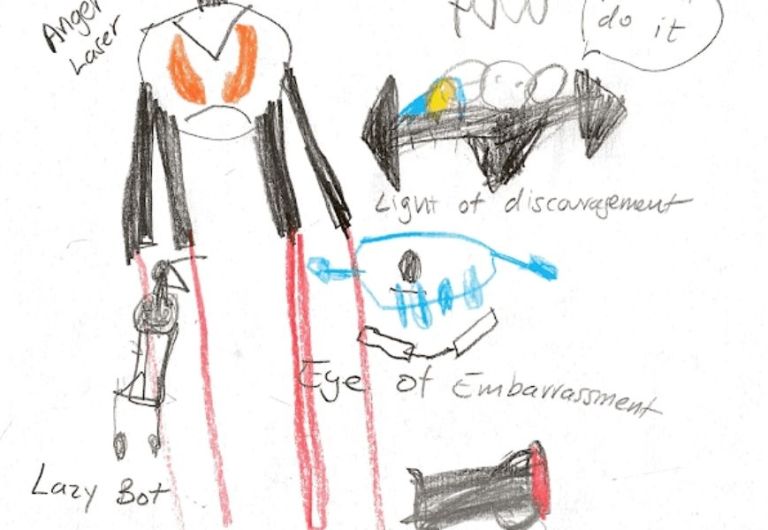
One other client I see made robot-themed characters such as “Lazy-Bot” and “Anger Laser.”

When to talk about the characters

Remember that in the moment, when these characters are “in control”, is not a good time to talk about them. Instead, I find that it is better to use them to discuss what happened when a kid is regulated. Creating your own language with characters allows you to talk more freely about it without kids feeling shame.  After everyone is back to feeling calm, that is when you can talk about what could have done differently.

You may even say, “Wow, you didn’t let ___ stay in control this time. Great job.”

Source

Fun Child-Tested Phonological Awareness Activities For Parents

As an SLP and mom of a very active, just-turned-3 year old, I can say that early speech and language development is incredibly important to me. I want to ensure that my kiddo is supported in learning how to produce speech sounds correctly and in developing those critical pre-reading skills like Phonological Awareness.

Develop pre-reading skills

So what do I mean by pre-reading skills? Here are a few important ones:

  • Interest in reading
  • Basic language skills
  • Phonological Awareness

Here is where I think many parents will say, “I know how to read books with my little one, and she has some basic language skills. But what is phonological awareness, and what am I supposed to do about that?!”

Phonological Awareness made fun!

First, let’s define this intimidating term.

Phonological Awareness is simply the understanding that language has structure and patterns and that words can be broken down into smaller units. Phonological Awareness includes things like:

  • being able to rhyme
  • identifying words that start with the same letter/sound
  • knowing the alphabet letters
  • knowing the sounds that the letters make
  • being able to break words apart or blend sounds together to say a word

These skills are obviously imperative for learning to read. Phonological awareness also helps children with their articulation. So if your child is in speech therapy or has difficulty producing certain sounds, you can also support them at home by working on these skills.

Phonological Awareness Activities

Good news is that there are some really quick and easy ways that you can help your child develop these important skills at home. Here are a few simple ideas that I have used successfully with my own toddler/preschooler:

ABC book scavenger hunt

I came up with this idea on the fly one Saturday during the pandemic lockdown. Parks were closed, we had exhausted all indoor activities, and I was desperate to get out of the house and keep my kiddo busy. For this activity all you need is sticky notes and an ABC book with pictures for each letter. You very likely have one of these in your house somewhere, but if not you can borrow one from your local library.

Place a sticky note by each alphabet picture. Then take the book and a pencil along on your scavenger hunt. Look around your house, yard, or neighborhood for as many of the items as you can find from the picture book. Help your child use the pencil to make a check mark on the sticky note for each item you find.

I am lucky enough to live by a walkable downtown, so I took my little guy on a stroller ride around town as we found items in shop windows or along the sidewalk.

Therapist tip:

As you complete the task, talk about what letter/sound each word starts with and help your child identify the corresponding alphabet letter in the book. This helps your child develop letter-sound correspondence and the ability to recognize words that begin with the same letter.

Silly word games

You don’t need any materials for this activity, and kids love it. No really! Simply make up silly rhymes or word change-ups while you are on the go. This activity also does double duty in that it not only helps your child develop phonological awareness skills but it is also a great distraction and mood booster.

Here is what I mean.

A common scenario at my house – my little guy is frustrated that I had to help buckle him into his carseat (because he really wanted to do it all by himself), then he realizes he is wearing his gray shoes and he really wanted to wear blue. In a nutshell, our day is going downhill fast.

So I simply start making silly words as we drive, “Are you talking about your duckle, I mean wuckle, I mean buckle? Bucky, buckle, ducky, duckle!”

I know it sounds silly, but this almost always distracts my toddler when needed and gets him giggling. After some practice, I can even say, “What if buckle started with an L, how would you say it then?” and he laughingly belts out, “Luckle!”.

Therapist tip

This activity makes for a great distraction for little ones, and it also helps in developing key phonological awareness skills, such as rhyming and sound manipulation. If your child is having difficulty producing certain speech sounds, you can even use this time to practice the target sound while making silly rhymes.

Letter of the day

This activity is highly adaptable depending on what materials you have handy. When creating this activity in my own home, I have used a set of magnet letters, a food tin, and some small toys/objects.

So here is how we do “Letter of the day” at our house.

I choose a magnet letter and stick it to a metal food tin that I happened to have in the back of a cabinet. Then I grab a small object or toy that begins with that letter and put it inside the tin.

For example, for the letter M, I might put a toy wind-up mouse or a pair of mittens inside the tin. This seriously takes all of 5 minutes to put together, and is easy to do once your kiddo has gone to bed.

Then in the morning your child can discover the letter and open the tin to find the object inside. You can talk with your little one about the letter and the sound the letter makes.  Help her to recognize that letter in books or signs as you go about the rest of your day. You can even try to draw the letter, cut it out with paper, or use dry cereal to create the letter on the child’s plate or high chair tray.

We certainly don’t do a letter of the day every day at our house, but I can easily bust it out when I feel like my kiddo needs some extra stimulation, or if he needs to work on a particular letter-sound.

Therapist tip

This activity is great for building alphabet awareness and letter identification. Help your child develop these skills by bringing their attention to letters and their corresponding sounds across various environments, such as during book reading at home. You can also  challenge them to try to spot the letter while out and about in the community.

These are just a few simple tactics that have come in handy for me as an SLP and mama. You can tailor them to suit your specific needs and the materials you have on hand. If your child is receiving speech therapy, your SLP can provide you with even more recommendations for activities that are individualized to your student’s particular needs.

About the Author

Phonological Awareness Activities

Sara Smith, MS, CCC-SLP is a Speech Language Pathologist and Lead Product Manager with E-Therapy. She has worked extensively with children and adults on the autism spectrum in schools, group homes, private clinics, and via teletherapy. Sara has extensive experience in the teletherapy space providing trainings and support for a variety of therapists, including SLPs, OTs, PTs, and mental health professionals. She has presented nationally on best practices for teletherapy in the fields of speech pathology, early education, and telemental health.

Source

7 Powerful Mental Health Tips To Manage Stress At School

Although some degree of stress is inevitable, there are many ways to manage your stress level and even transform it into positive action. In today’s guest blog post from the folks at bold.org, you’ll find strategies to deal with the stress and anxiety that ongoing events and even everyday life can cause us.

For students of all ages, stress is a very real part of life. It’s also entirely normal, so if you are currently dealing with stress, be assured that you are not alone. The current Covid-19 situation, coupled with uncertainty about the future, has made this a particularly challenging time for many people.

It’s a good idea to have a variety of different strategies at your disposal, as some days you may favor channeling stress into exercise, while at other times, meditation or stress relief breathing will be more effective. Most importantly, realize that it’s completely fine to ask for help if the stress becomes more than you can manage on your own.

Here are 7 tips to help manage stress at school:

1. Remind yourself that no one is perfect

School can be a very competitive place, with constant pressure to achieve. Between striving for excellent grades and extracurricular or athletic success, there just sometimes isn’t enough time to do everything. And even when you’ve tried your hardest, there will inevitably be some disappointments. The sooner you realize that, the sooner you’ll be able to effectively manage stress.

2. Take practical steps to resolve what you’re stressed about

One of the most effective ways to deal with stress is to turn that stress into action. If you’re worried about an upcoming test, spend an hour making flashcards and have a family member quiz you. If worries about applying to college are keeping you up at night, come up with a plan to finish your essays, request your recommendations, and find scholarship opportunities with plenty of time to spare.

This advice may seem obvious, but stress can often get in the way of action, leaving you unable to do anything except worry. Remind yourself that you’ll feel better if you take concrete steps to confront whatever is bothering you, rather than simply thinking about it. Knowing that you’ve put your best effort forward can be a powerful stress reliever.

3. Practice gratitude

When stress begins building up, taking a moment to think about everything you have to feel grateful for is an effective way to put stressors into perspective and compartmentalize the things you worry about.

There are several excellent ways to practice gratitude, but one of the most powerful is to spend a few minutes doing a gratitude meditation. Find a quiet place, close your eyes, and allow yourself to experience feelings of gratitude for your surroundings, friends, family, and yourself. In just a few minutes, you’ll find yourself focusing on the aspects of your life that you are thankful for and that bring you happiness, effectively pushing negative thoughts away.

4. Make sure you have someone to talk to

Keeping your feelings of stress inside can make them exponentially worse. When you become stressed, discuss how you’re feeling with a close friend or family member. Although you may initially think that you don’t want to burden them, your friends and family will be glad that you felt comfortable opening up and happy to provide an empathetic ear.

5. Stress relief breathing

Breathing is the most vital of human activities, but we often forget just how essential breathing is for keeping one’s mind and body calm. If you’re feeling stressed, taking deep, measured breaths and slowly releasing them can help you relieve the tension in your body. Breathing for stress relief is an easy technique you can do anywhere, at any time, and you’ll feel the benefits immediately.

6. Take time for exercise, especially outside

The mental health benefits of exercise are well documented, from releasing endorphins and improving your mood to helping you sleep better and feel more energized. Running, biking, playing a sport, or even just going for a short walk are good for your physical health, and they can also play an essential role in maintaining your mental health.

7. Accept that sometimes you can’t manage stress on your own

If you’ve tried all of these techniques but your stress levels don’t seem to be dissipating, you might want to consider seeking help from your school counselor or a therapist. Stress is a normal part of life, but if you’re dealing with chronic stress, or if the stress has leads to anxiety, you may need the guidance and support that only a professional can offer. Although you may be reticent to take this step, most people who meet with a counselor say they wish they hadn’t waited so long.

Talk with us: How do you manage stress at school? Share your thoughts in the comments or tweet @etherapyexperts

Source

Summer Activity Calendars For Teletherapy

by Megan Magee

Summer break is just around the corner. Are you prepared to help your students maintain their skills over the summer months? We’ll tell you how to create and implement fun summer activity claendars – a spin on bitmoji rooms!

Monthly activity calendars are a great addition to teletherapy sessions, brick and mortar therapy sessions, and in-classroom settings both remote and in-person during the school year. They are also a fantastic way to provide your students with activities that can help with maintaining skills over the summer months.

Summer activity calendars can be created and tailored for speech therapy, occupational therapy, physical therapy, mental health and counseling services…the sky’s the limit. Classroom teachers can provide summer calendars by content area as well – think daily summer math challenge activities – to help keep their students sharp.

If you’ve checked out one of the E-Therapy Monthly National Day calendars, you already have a good understanding of how these calendars work. If not, you can grab a copy of our June calendar.

summer activity calendars

The daily activity links embedded in each day can be used as warm-up or ice breaker activities for your class or therapy session. The chosen activities can target a multitude of therapy goals and classroom skills.

Create your own student summer activity calendar

Use the tips below to get started creating your own student summer activity calendar for carryover of skills. I use Google Slides to create all my calendars. You can use that or a similar program to create your calendar.

Create a fun background

First, you’ll want to add a background, because what’s a calendar without something fun to draw attention in the background?

  • Once you open a new blank Google Slides presentation and remove any title/subtitle boxes, click on “Insert” → Image.
  • You have the option to insert a background image from your computer or you can search the web with key image searches such as “summer background” or “beach background” to find a fun background to add interest to your calendar.
  • Once you select a background, stretch the background to fill the entire slide space. You can also copy and paste a duplicate copy of the background to match up side-by-side background images to fill the entire space if the image gets too distorted.

Create a calendar grid

Next, you need to create the calendar grid.

  • Click on Insert → Table. 7 x 7 is typically an appropriate table size depending on the number of days in the month. Use seven columns for days of the week and 6 rows for 5 weeks in a month, plus one more.
  • Merge the top row to use as the name of the month.
  • Once your table is created, make sure you fill the table background so that students can see the content of the cell.
  • Add dates to each cell

Fill in with images and activities

Now comes the fun part! Locate and paste images into your calendar.

  • You can use the Insert → Image → Image from Web or you can copy and paste an image that you find from your own Google search.
  • Link each image to a website or to a PDF activity in Google Drive, or you can simply provide written directions for an activity you’d like the student to complete on a particular day (ex: Use your best /r/ sound to describe your faviorite thing about summer so far.)

Saving and sharing your calendar

Now you are ready to save your completed calendar and share it.

  • Export the slide as a PDF that can be emailed home to families for summer practice.
  • Another way to share the calendar is to create a slide “copy link” that you can send home to families that will allow the student to download their very own online copy of the summer activity calendar.

Get you free summer calendar template

Don’t feel like you’re ready to create your own summer activity calendar just yet? We’re here to help.

Grab your copy of our blank summer activity calendar. All you need to do is add the month, dates, and links.

summer activity calendars

Happy Summer from all of us here at E-Therapy!

About the Author

summer activity calendars

Megan Magee, M.S., CCC-SLP, is the account manager for E-Therapy’s eSMART Teletherapy Platform program. Megan holds a BS from Kutztown University and an MS from Towson University both in the area of speech-language pathology. Megan worked as an SLP in a variety of settings including brick and mortar schools, early intervention, and adult home health prior to making the transition to teletherapy 11 years ago. After planting roots in Pennsylvania and growing into an established teletherapist, Megan branched out into leadership positions in order to share her teletherapy knowledge and expertise with new therapists. Megan has supported and trained hundreds of teachers and therapists nationally.

Source

Online Therapy Activities And Games: June 2021

Summertime is here! We know that this school year has been a unique adventure through uncharted waters. In the spirit of helping you sail smoothly into summer, we’d like to make your last few days as stress free as possible when it comes to planning your teletherapy sessions. We’ve got your planning covered with plenty of summer fun jam packed into our FREE June online therapy activities and games.

June calendar of activities

We’re back with this sweet edition of our E-Therapy Daily Teletherapy Activity Calendar. Our June calendar is filled with fun and engaging activity links that are perfect for distance learning educators and therapists. Once you download your free copy, you’ll instantly have access to a new activity each day to use with your students as a daily warm up or to target specific therapy goals. No matter how you choose to use them, our monthly activity calendars are sure to make planning a breeze.

online therapy activities and games

Year in Review therapy reflection activity

The end of the school year is an exciting time for all and a great time to reflect on all of the accomplishments of the year gone by. If you’re in need of an activity for your final therapy session of the school year that allows your students to reflect on their therapy accomplishments, then look no further than our Year in Review Therapy Reflection Activity. This fun and colorful activity is a fantastic way to sum up the school year and can even help give you ideas to transition your caseload into next school year.

online therapy activities and games

Summer sticker scenes

Check it out! E-Therapy has been busy working on your newest speech therapy material – Jamboard Sticker Scenes. This month we’re launching our first series just in time for SUMMER. Our Sticker Scenes combine the versatile use of the drag and drop feature in Jamboard with the fun of peel and stick scenes allowing your students to work on a variety of speech and language goals while using creativity to create a unique picture scene.

Grab your free copy of our first ever Sticker Scene: Summer Edition and stay tuned for additional scenes and themes coming soon!

online therapy activities and games

Summer home practice calendar template

Help your students keep their therapy skills sharp this summer with your free copy of our Summer Home Practice Calendar Template. We created this template with your students and therapy needs in mind. Simply add the month and dates to your own downloaded calendar copy and then insert fun activity links or simple instructions for a daily practice activity. This calendar template is so versatile that it can be used for any type of therapy. Your students won’t even mind the quick trip they get to take to the beach daily while practicing their target skills.

online therapy activities and games

Get monthly online therapy activities and games to use in your teletherapy sessions

Check out our monthly Activity Round-ups for even more fun online games and activities that can easily be used in your online teletherapy sessions.

Original Source

Are You Set For Extended School Year Services?

After a year and a half into the COVID-19 pandemic, school leadership are still navigating the aftermath. Special education administrators across the country are working to identify students with disabilities who have regressed and/or missed extensive amounts of related services. They know students have had difficulty recouping skills from school closures, so are considering an extended school year.

An Extended School Year for special education students

Eligible students with disabilities who receive special education services may get offered an “Extended School Year” (ESY). During the 4-5 weeks off this summer, districts will deliver individualized instructional services beyond the regular 180-day school year, if the Individual Educational Plan (IEP) team determines ESY is needed. ESY services are not the same as summer school or enrichment programs, and generally they are not limited to just summer break.

ESY eligibility determinations and services are being readied to provide services for students with IEPs services, keeping in line with FAPE (free and appropriate public education). IEP teams determine initiation, duration, and frequency of needed services, including compensatory services, to help students receive critical instruction and/or services for mastery of goals. Regression of skills is a major factor in the IEP team’s decision, but each state has different standards, so check your state’s DOE for more information or the U.S. Department of Education for state standards.

Schools may choose to provide ESY services in the ways we are now all accustomed to:

  • In-person classes or one-on-one instruction
  • Hybrid mix of in-person and virtual
  • Virtual classes
  • Teletherapy

Staffing challenges during ESY

The Extended School Year extends after the school year ends to make sure all students are up to date with their IEPs. Given that summer break is the longest break in the school year, that is when many ESY services take place. Because services are held over summer break, staff may have limited ability to provide services.

The challenge for schools is that with low staffing, staff burnout, and higher than normal makeup cases, educators and therapists won’t be able to keep up with the demands they are facing.

This is where E-Therapy can lend a hand to your special education department.

E-Therapy provides teletherapy to schools during ESY

When your school needs teletherapy experts to deliver online services, we are here to help. E-Therapy is not a one-size-fits-all program or approach to school related services. We partner closely with your special education team to fulfil the needs of your school and program.

E-Therapy can shape a program to help your district/school complete Extended School Year services for students in need. We also support your in house school-based therapists by licensing our award-winning platform and training your therapists. Our platform is a great way to get your program running successfully over the 4-5 weeks that ESY is provided.

Let’s talk about your school’s ESY needs

It is important to plan ahead for ESY services and use the 4-5 week time frame to focus on the students who need extra services to make sure regression does not continue. We are here to help your special education team in any way possible.

Contact our Sales team to learn more.

About the author

Diana Parafiniuk, M.S., CCC-SLP 

Co-Founder/Chief Marketing Officer

Diana founded E-Therapy in 2009 after finding herself driving hundreds of miles per week. She knew there must be a better way to deliver speech therapy to students and schools. Today, E-Therapy is an established market leader in teletherapy. We provide the highest quality services and reach students and schools across the United States. Read more about Diana.

Source

End-of-Year Teletherapy Reflection Activity

I’m never sure which is more exciting; the start of a school year, fresh with all the new possibilities the year has to offer or seeing the joy on students (and teachers) faces as they head off for several well deserved weeks of summer relaxation. I remember as a kid loving the last few days where peers signed year books, watched movies, cleaned out lockers and desks and completed end-of-year check-out activities.

Sure, the anticipation of summer break was a big part of the enjoyment, but it was also fun reflecting on the completed school and how far we’d grown as a class, and me as an individual.

Reflect on successes for a strong finish

When I became a therapist, I thought, why not allow therapy students the same opportunity to reflect on their success and areas for growth? After trial and error, I found that my (and my student’s) favorite type of end-of-year activity was something tangible, and of course, colorful. They could complete it and take it home to share with their families. I often kept a copy so that if I was with the same school and with the same caseload once I transitioned to the remote environment, that we could use the end-of-year activity as a kick-off back into a new school year as well. 

We here at E-Therapy wanted to share with you a similar activity that you can use with your students. Check out, A Year in Review, a cumulative sheet of some of our favorite therapy reflection questions.

End-of-Year Teletherapy Reflection Activity

Use this activity remotely by screen sharing while using built-in annotation tools from your platform. It can also be printed to use as a paper copy in the brick and mortar setting. 

A positive end to a challenging year

Use these Year in Review questions to send your students into summer feeling successful. Point out what they’ve accomplished in teletherapy during this challenging year. Keep them motivated based on their achievements, and spark interest in completing summer home activities to keep their skills sharp.

Use this activity sheet to gather valuable feedback on what your student enjoyed or didn’t like about teletherapy. Every student has that favorite therapy game. But some may cringe when they sign into your session and see their least favorite game. Why not use this reflection activity as way to gauge interests for the coming year?

Happy Summer from all of us at E-Therapy!

About the Author

End-of-Year Teletherapy Reflection Activity

Megan Magee, M.S., CCC-SLP, is the account manager for E-Therapy’s eSMART Teletherapy Platform program. Megan holds a BS from Kutztown University and an MS from Towson University both in the area of speech-language pathology. Megan worked as an SLP in a variety of settings including brick and mortar schools, early intervention, and adult home health prior to making the transition to teletherapy 11 years ago. After planting roots in Pennsylvania and growing into an established teletherapist, Megan branched out into leadership positions in order to share her teletherapy knowledge and expertise with new therapists. Megan has supported and trained hundreds of teachers and therapists nationally.

Source

Phonological Awareness And Articulation Therapy For SLPs

Early in my career as a Speech Language Pathologist I worked on some research projects related to phonological awareness and literacy development. After pouring over countless studies and research articles, a consistent theme began to emerge. I began to see a strong link between phonological awareness, reading skills, and speech-sound disorders (here is where my more experienced SLP self says,“duh.” Right?).

In a nutshell, kids with speech-sound disorders typically have poor phonological awareness skills, and kids with poor phonological awareness skills typically have difficulty learning to read. When phonological awareness is improved, early reading skills improve…AND research has shown that improved phonological awareness also improves articulation skills.

Once this concept clicked in my young SLP brain, I began to see opportunities everywhere for incorporating phonological awareness. I also began to see so many missed opportunities during speech therapy sessions.

As I observed fellow SLPs, I noticed that they solely addressed the target sound, but did not address the larger patterns of phonology and early literacy skills. It was as if they were scared to step into the world of literacy.

“It’s not my job…”

When I casually asked some of my fellow therapists about this, I received two consistent responses. The number one answer was,“It’s not my job to teach kids how to read”, and I totally agree. It is not our role as an SLP to be a reading specialist or “teach kids how to read”, but as a speech therapist we have a unique opportunity to incorporate some pre-reading skills into our approach. This not only benefits the students in literacy, but also improves their articulation and speech-sound development, a win-win, right?!

What is phonological awareness anyway?

Phonological awareness is the understanding that language has structure and patterns and that words can be broken down into smaller units.

Phonological awareness includes tasks such as:

  • Rhyming
  • Alliteration
  • Letter identification
  • Segmenting
  • Blending

We aren’t talking about retraining ourselves to be reading teachers, we are talking about using the skill set we already possess as SLPs, and just incorporating some of these pre-reading skills into our articulation therapy. Early literacy skills and articulation development truly go hand in hand, so it just makes sense!

“I don’t have the materials or time…”

This leads to the second most common response from my fellow SLPs, “I don’t have the materials or time to include literacy development into my sessions.”

I hear you!

You are already pushed to your limit and can’t imagine adding anything else to your plate. The good news is that you can easily incorporate a phonological awareness approach into your speech therapy sessions using materials you already have in your therapy room.

Phonological awareness activities for SLPs

Here are just a few easy ideas for when you are working at a brick and mortar site:

Paperclip Pick-up

Attach paper clips to several of the child’s practice word cards, and set the cards out on a table. To target rhyming say, “Find a word that rhymes with…” and let the child use a magnet wand or magnetic “fishing” tool to pick up the correct card and say the practice word. For expressive rhyming practice, let the student pick up a card of her choosing, practice producing the word, and then have the child provide a rhyming word.

Lights Out

Place several word cards on a table, floor, or around the room. You can use this activity to target identification of initial sounds by saying, “Find a word that begins with…”.

Then turn out the lights and use a flashlight to help the student scale the table or room for words that begin with that sound. You can also use the activity to target expressive alliteration skills by letting the student find a card of her choosing, practice production of the word, then ask the child to provide as many words as she can think of that begin with the same sound.

Beanbag Toss

Set out a bucket and a few beanbags or small balls. Using your student’s practice word cards, help them to say each word and identify the number of sounds or phonemes within the word. Based on the number of sounds within the word, the child will get to toss that many bags/balls into the bucket. Once complete, have the child say the whole word at the end.

For example, if targeting the word moon, help the student to segment the phonemes m-oo-n. Allow the child to toss three bags/balls into the bucket while you help them to again segment the word into m-oo-n (3 phonemes = 3 balls to throw). End with the child blending the sounds back together to produce the whole word.

I used activities like this everyday when I worked onsite at brick and mortar schools, and it didn’t require any extra planning or special materials. It was just a slight shift in my approach, and the results were very rewarding. Once I started incorporating phonological awareness into almost all of my articulation (and language) activities, I noticed that something started to click for many of my kiddos. They started to grasp the larger patterns of sounds and words, which helped them to make more progress overall.

Get iPad apps with a phonological awareness approach

A little later in my career when I made the transition to teletherapy, I had to rethink my approach a bit. I had always been interested in creating my own games and activities, so I began a project to create digital versions of the therapy tasks that my students and I loved. This pet project eventually led me to become an app developer.

After years of creating every aspect of the apps myself- artwork, audio, game programming, and design, it finally all came to fruition! I now have several speech therapy apps available on the App Store, and I am happy to share them with you. In honor of Better Speech and Hearing Month, the apps below will be on sale for just $0.99 for the month of May and June!

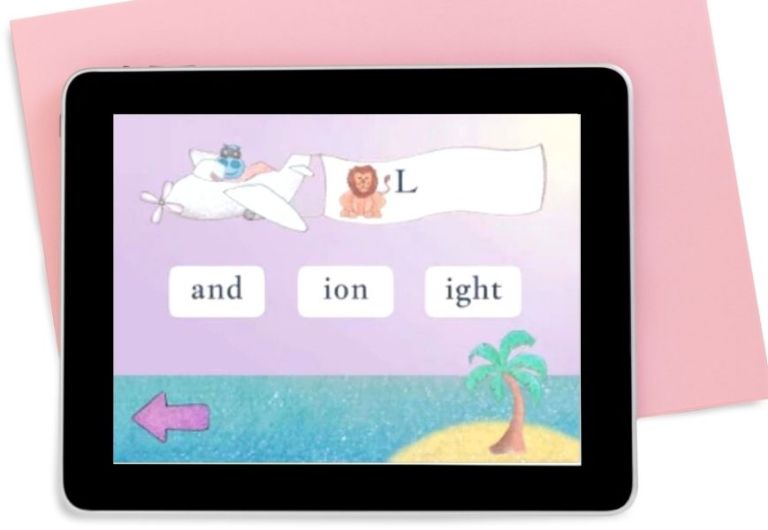
Each one of these apps include multiple articulation games with a phonological awareness approach, auditory bombardment, practice words, and an interactive story. The apps are available for download on an iPad. You can use the apps onsite with students using your iPad, or simply mirror the iPad to your computer when in a Zoom session. I hope you have as much fun using these apps as I did creating them!

My Articulation: Initial L

My Articulation: Initial K

My Articulation: S-Blends (Sm, Sp)

About the Author

phonological awareness

Sara Smith, MS, CCC-SLP is a Speech Language Pathologist and Lead Product Manager with E-Therapy. She has worked extensively with children and adults on the autism spectrum in schools, group homes, private clinics, and via teletherapy. Sara has extensive experience in the teletherapy space providing trainings and support for a variety of therapists, including SLPs, OTs, PTs, and mental health professionals. She has presented nationally on best practices for teletherapy in the fields of speech pathology, early education, and telemental health.

Source

Using Speech Targets To Increase Articulation Productions During Teletherapy Sessions

Two important keys to improving a child’s productivity during articulation therapy, in both onsite speech therapy and teletherapy sessions, is to

  1. 1. increase the quality and quantity of target sound, minimal pair, or maximal pair practice in varied contexts, and
  2. 2. give specific feedback to help them get closer to their target or goal

Activities that promote mass practice need to be engaging. Using PowerPoint games specifically designed for speech therapy and teletherapy, such as Picture Reveal PowerPoint Game for Articulation Practice, can supply both extensive practice opportunities while providing some fun and interactivity.

Once students are engaged and providing more practice attempts, feedback continues to be important. Personally, having students produce word after word using the same distorted R sound just to race through has never helped any of my students get closer to their learning targets.

Students tend to respond well to specific feedback. They not only need to know how to increase the accuracy of their productions, therapists should get in the habit of naming and noticing what they did well rather than just saying, “Good job!” all the time.

Using Speech Targets for goals

Using a Speech Target is very helpful in explaining to students how far or how close their productions are to their own learning goal. Using a tool such as the Speech Targets Jamboards can help explain to students that no one has perfect speech, but we work to get as close to the target as possible. I also stress that no one hits the target 100 percent of the time. Targets are specific to the individual student.

Use the Speech Target together with feedback such as, “ . . . try lifting your tongue and see if that gets you closer to the target.

speech targets

Speech therapy should be fun and motivating, but it is still work and sometimes feels hard or frustrating. Even through the webcam, students show how they are feeling on their faces. As I pick up on these cues, I may stop for a bit to talk with the student and ask them if they are feeling frustrated. I tell them that if they are feeling frustrated or tired, it means they are working hard.

Effort and motivation are linked. I have found that students may be more willing to push through difficulties when they hear you name and notice their efforts.

Using Speech Targets for self-reflection

Using Speech Targets also helps students to self-reflect. Building self-reflection into therapy sessions facilitates shifting the responsibility of increased accuracy more toward the student. This is especially important to students who have been in speech for many years and don’t appear to be self-monitoring. Older students also need opportunities to engage in conversations about their speech goals.

Kids are more than their speech – they are whole persons with fears, passions, triumphs, and failures. Articulation therapy may feel very risky to a 5th grader who has been in speech since preschool. They literally know the drill. Using a therapy session periodically to discuss their opinions about how therapy is going can be useful in creating trust.

Striking a balance between presenting engaging activities and providing “just right” feedback are important for successful speech therapy sessions, whether the service is provided via teletherapy or delivered in an onsite setting.

For more articulation practice activities, check out Articulation Jewels Editable Jamboard.

speech targets

Need activities for your teletherapy sessions?

Make sure to follow us on Facebook, so you’ll be the first to know! And check out all the activities here on our blog!

source

Design a site like this with WordPress.com
Get started