Articulation Strategies And Tips For The /r/ Sound

Empower Guest Blog From Angela Jordan, MA, CCC-SLP

If you are a school-based therapist, you definitely have students on your caseload with goals to produce the dreaded /r/ sound. I say “dreaded /r/ sound” because it can be a very daunting sound to tackle and correct. There are many times that the student has practiced and practiced, and you as the therapist have stood on your head trying every trick in the book but that /r/ just will NOT correct.  

Fear not, I have some articulation tips and strategies that have helped my students have success along the way! I hope that they become helpful to you!

Let’s start with some tips…

Articulation tips for /r/ sound

  • Make sure that the student knows HOW to produce the sound. Teach him/her that the muscles make the sound, not the bones! This will make it easier to get buy in!
  • Along with the first bullet point, have the student tell you WHY he or she wants to correct the /r/- do this first and do this often!
  • Assess /r/ in ALL contexts. There are many vowel /r/ combinations that are left out of standardized assessments. This way you will know what goals to write!
  • Start thinking about dismissal and plan for it with the student/family/teacher right from the get go.  
  • I do not always achieve 90-100% accuracy before dismissal. If the student is able to use strategies with independence, and the sound is not affecting that student academically, it is time to dismiss!  

Now on to some tricks for working on that /r/ sound…

Strategies to improve /r/ sound

  • Retracted /r/- I typically use this teaching method, and have found it successful. Have the student do the following:  lips don’t move, jaw moves only slightly, and tongue is in the back of the mouth with the sides elevated. This is also called the Butterfly Effect. The student can feel the tongue on the top molars.
  • Bite Blocks- These are helpful in creating an open mouth where the jaw and mouth do not move. You can use tongue depressors, wine corks, etc.
  • I have some of my students talk like a ventriloquist. It is fun, and it gets the articulators where they need to be!
  • Shape /r/ from /ee/
  • Say /arrr/ like a pirate

I hope that these tips, tricks, and strategies for the /r/ sound have been helpful to you! Please reach out if you have any questions or want to bounce ideas!  These have helped my students, and I wanted to share them with you!

For more therapist-approved activities to keep your children learning, check out E-Therapy’s Teletherapy Activities section.

About the Author

articulation tips r sound

Angela Jordan, M.A. CCC-SLP has been a speech-language pathologist for 11 years and currently provides teletherapy services through E-Therapy. She lives in Pittsburgh, PA with her two daughters, husband, and two cats.  Angela has accrued a wide range of experiences in her career, including both pediatric and geriatric. Something she has learned along the way that has helped her in her career in learning to make a difference is to always meet the person where he or she currently is. She says, “There have been many times that I come into a session with a plan, and that plan just isn’t working. It is so important to talk to your students and parents, find out what they like, find out what is going on in their lives, and really build that rapport. Relationships are key, and without one it is very hard to move forward! Once you meet that student where he or she is and move from there, therapy is so much more effective.”

Original Source

Professional Email Etiquette for E-Therapist Success

Working as an E-Therapist comes with the unique challenge of communicating primarily through email. We have all been told, “If it is a tough conversation, pick up the phone and call.” Many times, this is absolutely the best advice.

But what about the countless emails to case managers, parents, schools, and teachers? These aren’t all tough conversations, but they’re frequent and often the only way that we communicate with a majority of our colleagues. That means that their perception of who we are is based entirely on the words we write. 

This is a bit of a scary thought, but, fear not, it’s actually a great opportunity! 

It’s easy to focus on all of the negative or complicated aspects that are associated with email communication but learning how to set the tone in your emails will help you build lasting relationships with all of the people that surround your students. 

So what do you need to do?

First, remember this:

Perception is everything 

How do you want to be perceived?

For me, I want my colleagues to perceive me as someone who is friendly and helpful because those are two traits that are important to me in real life, not just an email persona. 

Because of this, nearly all of my emails contain these four things:

  1. Salutation
  2. Friendly well wish
  3. Offer to help
  4. Closing

They would look something like this…

Good morning!
I hope that you’re doing well!… (Request for something here!)
…. Let me know how I can help!
Warmly,

or this…

Hey Katie!
I hope you had a nice weekend!… (Request for something here!)
…Let me know how I can be most helpful!
Kindly, 

In general, it’s just nice to start and end emails this way, but this friendly helpfulness compounds itself over time and paves the way for more difficult, direct, or uncomfortable conversations to happen in productive and friendly ways, too. 

Here’s a second thing to remember about perception:

Your intention doesn’t matter

The reader interprets and decides how they will perceive your email. That sounds kind of terrifying, but it doesn’t have to be!

Taking a moment to think about what your reader is experiencing and working on, and then tailoring your email tone to be friendly and helpful, encourages your reader to remember, “Oh right! I like her!” or “He’s a good therapist!” 

I find asking for things in soft, more passive ways helps remind colleagues that I am here to help and that we’re on the same team. We live in a fast-paced world and it’s easy to fire off a quick, direct email without taking a moment to be thoughtful, but consider the difference.

Here’s a direct, to-the-point email:

What’s the call-in number for the IEP? 

Contrast that with a friendlier tone that only takes a few more seconds to compose:

Hey!
Hope you’re well.
Can you please send me the call-in number for the IEP tomorrow?
Looking forward to talking to you then!
Warmly,

Sure, it took a few more seconds to write, but which email would you prefer to receive if you were being asked for information? Adding in these little sentences goes a long way toward building relationships. 

These tips are all relatively simple and easy to follow, but what about when it really is a tough conversation, or when someone may have forgotten about a deadline?

Here’s the good news, you still control the tone and can encourage a positive perception. One of the major benefits to writing emails is that you can revise, edit, or completely trash any version of an email before you hit send.

You’re steaming mad?

Wait to send the email. Take a walk, grab a cup of coffee, or hug your dog. After you’ve cooled off, revisit the email. Ask yourself these questions:

  • Am I making it easy for the reader to perceive this email as helpful?
  • Does this sentence inspire change or help solve the problem? 
  • Would I be upset if I got this email?
  • Does it really accomplish anything if the person I am emailing knows I’m mad?

After you’ve asked yourself these questions, make some changes to the email as needed, and, if it really is a tough conversation, pick up the phone and call!

Want to be an E-Therapist?

E-Therapy works with hundreds of therapists around the country. If you are interested in joining our team to provide live face-to-face online Speech-Language, Occupational and Physical Therapy or Counseling/Social Work and Assessments/Diagnostics, then sign up as a therapist here.

Original Source

Processing Trauma To Handle Emotional Distress

Continuing our 2-part series on emotional distress, author and life coach Cathy Hartenstein educates readers about mental/emotional challenges. The cycle of experiencing trauma, forming beliefs, and telling yourself stories can be challenging to overcome. Once you begin to understand it, it frees you to choose new ways to process challenges, alleviate emotional distress, and heal your life.

What causes beliefs

In order to process our trauma we form a belief. Beliefs come from the conclusions we draw from our life experiences.

“Beliefs are our brain’s way of making sense of and navigating our complex world. They are mental representations of the ways our brains expect things in our environment to behave, and how things should be related to each other—the patterns our brain expects the world to conform to.*”

Beliefs come from traumatic experiences, life lessons, inherited ideas, and unconscious modeling. We can either form positive or negative beliefs. Negative ingrained beliefs contribute to and exacerbate our emotional distress. Core negative beliefs are:

  • I am not loved
  • I am not worthy
  • I am not safe

When these beliefs are triggered, we experience emotional distress.

Read part 1, The Root Causes Of Emotional Distress

Forming beliefs

Drawing conclusions from trauma

When we have a traumatic experience, we are thrown into a situation where we are terrified and unprepared. During this time, we draw conclusions about ourselves, the world we live in, and our general well-being. These conclusions become beliefs and get embedded into our subconscious. We use these conclusions and beliefs to protect ourselves in the future if this situation happens again.

For example, if we are rejected, we might form the conclusion “something is wrong with me” or “I’m not lovable”.

If we are attacked or put in physical danger, we might conclude, “I am not safe”.

If we are betrayed, “I can’t trust anyone”, and so on.

These conclusions become ingrained in our subconscious and then inform how we navigate our lives and make decisions.

Beliefs are not formed from the trauma itself, but by the conclusions we draw from it. Therefore, if several people experience the same trauma, they will all draw their own conclusions and form their individual beliefs.

Forming beliefs from life lessons

We also form beliefs based on our life lessons. Our powerful learning experiences are stored in our subconscious minds so that we don’t have to relearn them. This is our implicit memory where we store how to walk, talk, and how to do our essential everyday activities as well as any important life lessons that we need to function and survive.

When we have difficult compounded learning experiences, these become foundations for our negative beliefs. Throughout our life we continually formulate additional subconscious programs based on life experiences.

Powerful suggestions

People are often influenced by powerful suggestions, which can create negative beliefs. What is said to us goes directly into our subconscious when we are in an altered state. We find ourselves in this altered state when in the presence of powerful people. Their words can either support or damage us.

Examples of powerful people are doctors, teachers, parents, and peers. Depending on their influence we can form beliefs accordingly. For example:

  • from doctors we can form beliefs about our well-being 
  • from teachers, beliefs about our intelligence
  • from parents, our safety and self worth, etc.

Inherited ideas

Beliefs can also be inherited. We inherit beliefs from our ancestors’ past traumas, our cultural upbringing (religion, nationality, etc), and our parents’ and societies’ established belief system. Sometimes we physically inherit experiences. A person’s traumatic experiences can leave a chemical mark on a person’s genes, which can then be passed down to future generations.

Unconscious modeling causes beliefs

When we admire someone, we tend to internalize their behaviors and their inner beliefs. If our parents are confident, we model their behavior and have confidence. If our parents feel victimized, we model their behavior and feel victimized. People model/copy what they see in the people they look up to.

Over our lifetime we accumulate negative beliefs from these experiences. Then we assign meaning to them which becomes a story that we create and let define our experiences in life.

How stories shape our experience

Stories are the meaning we assign to the events in our lives. The mind works like a big database constantly gathering information and storing it. When it receives new information it deduces what it is, assigns meaning, and creates a story.

Once we have developed a story, we begin to look for evidence in our life to support that story. If it is a negative experience, we tend to create a negative story. Our stories become our reality and perpetuate our negative beliefs. This makes it difficult to let go of our past experiences and forge new more positive habits and opportunities. This limits our ability to create positive outcomes and keeps us trapped in negative cycles that cause our emotional distress.

This cycle of trauma, belief, and story can be challenging to overcome, but once you begin to understand it, it frees you to choose new ways of processing challenges, alleviate emotional distress and heal your life.

How to handle emotional distress

Most importantly, it is imperative to recognize what trauma is at the root cause of the emotional distress, what belief you have formed because of that trauma, and the story you associate with it.

To find stability we need to address the underlying trauma, shift the beliefs, eliminate the stories, and get back to our healed, whole self to re-integrate long held patterns in more positive ways.

One of the very best ways to alleviate emotional distress is to practice self-compassion and acceptance. If we trace our conditioned emotional responses to the original trauma and give that part of ourself that experienced that trauma compassion and love, we can release the trauma and heal our negative experiences so that we won’t be in a constant cycle of emotional reactivity. Then we can experience life with ease and happiness.

*https://www.psychologytoday.com/us/blog/finding-purpose/201810/what-actually-is-belief-and-why-is-it-so-hard-change

Mental Health Programs for Schools

emotional distress

E-therapy’s new eQUIP Mental Health Programs are designed to equip students, educators, and your school community with skills and knowledge to address today’s critical mental health crisis. Learn more about eQUIP and our professional development options.

About the Author

emotional distress

Cathy Hartenstein is a Life Coach, EFT/Matrix Re- imprinting, and NLP Practitioner who is dedicated to helping people create more bliss in their lives and realize their highest potential. By constantly investigating what drives us, why we do the things we do, and searching for the beauty that she sees in humanity, she empowers people to release old trauma and live their best life. She has a strong background leading groups to realize their creative vision, having been actively involved in arts and education for over 3 decades as an international theatre artist, theatre professor at many prestigious universities, and workshop facilitator. In her work she strives to help her clients reconnect to themselves and overcome their personal obstacles to realize their greatest potential. Find Cathy at Create More Bliss.

Source

Are You Back-To-School Ready? Online Teletherapy For 2021

E-Therapy specializes in providing K-12 schools online teletherapy solutions that solve critical problems including special education staff shortages, employee retention, making up therapy time, and increasing student engagement. 

by Diana Parafiniuk

How are we this close to back-to-school? Crazy, right? It is sneaking up on us. All of us at E-Therapy want to make sure you are prepared.

Are you? Are you ready?

If not, here we are- raising our hand high in the air to help with those therapy sessions that you haven’t been able to fill. We get it- it’s been tough and we understand that everyone is understaffed. E-Therapy can ensure that your school year not only runs smoothly but starts off with a bang.https://www.youtube-nocookie.com/embed/mE0O76TB2rY?feature=oembed&controls=1&autoplay=1&enablejsapi=1&rel=1#038;enablejsapi=1&origin=https://www.electronic-therapy.com” frameborder=”0″ allow=”accelerometer; autoplay; clipboard-write; encrypted-media; gyroscope; picture-in-picture” allowfullscreen>

E-Therapy can help with staffing

Although E-Therapy is not a staffing agency, we do contract therapists that can help your special education team for the 2021-2022 school year. We leverage online therapy to deliver first rate teletherapy to school children across the United States. We have a long history of providing teletherapy, and it can be the perfect solution for your school district. Our nationwide team of licensed and expert teletherapists can fit seamlessly into your special education program in 3 simple steps.

So what are our 3 simple steps?

1. Contact Us– reach out to us and let us know what your needs are.
2. We will learn about your needs and set up an account for you and your school.
3. Onboarding staff in a swift and timely manner.

E-Therapy can not only provide therapists, but we can customize a program to fit your needs.

Increase productivity with a teletherapy management platform

We’ve got that, too!

Not only does E-Therapy provide online therapy via teletherapy, we can also help with a platform for your school. Most of you are going back to in-person school, so now is the time to provide your Special Education team the most innovative online teletherapy management platform to ensure top-level support and increased productivity.

If you are fortunate enough to be fully staffed, you can ensure job satisfaction and retention by providing efficient management of caseloads. The eSMART platform was designed with that in mind.

Our partner schools use our platform for

  • Assessments
  • Testing
  • Documentation
  • Real-time session tracking
  • and so much more
online teletherapy

eSMART is our teletherapy platform that your therapists will love!

Once you have licensed the platform, we get to work immediately, so there is minimal time ramping up. Your account manager will train your school-based team to get virtual sessions up and running with zero frustration.

Your therapists and administrators will enjoy eSMART features include some of the following:

  • Quick onboarding
  • Secure and private online therapy rooms
  • Session tracking
  • Real-time data reports
  • Built in compliance features
  • Smart session scheduling
  • Communication tools

And that is just a few features! Contact us and we can set up a free demo.

Get started with teletherapy in 2021

We want you to be prepared and back-to-school ready for the upcoming 2021-2022 school year. E-Therapy can help in more ways than just the two described above.

Teletherapy Resource Library

We continue to create meaningful materials for therapists to use in sessions. Activities, games, organizational tools, training videos, and webinars for Professional Development; E-Therapy’s team of therapists create new materials every week for your free use. Visit the E-Therapy Resource Library.

Mental Health Programs

online teletherapy

E-Therapy is excited to announce our new eQUIP mental health programs for both staff and students. Take a look at the eQUIP program offerings.

We take pride in being an all inclusive teletherapy company for students and staff. Don’t hesitate to reach out today to learn how we can provide services for your school!

About the author

Diana Parafiniuk, M.S., CCC-SLP 

Co-Founder/Chief Marketing Officer

Diana founded E-Therapy in 2009 after finding herself driving hundreds of miles per week. She knew there must be a better way to deliver speech therapy to students and schools. Today, E-Therapy is an established market leader in teletherapy. We provide the highest quality services and reach students and schools across the United States. Read more about Diana.

Original Source

Why Schools Invest In E-Therapy’s Online Therapy Services

“E-Therapy has been a very reliable and outstanding service provider for our schools. They have terrific customer support and deliver reliable & timely services. We highly recommend E-Therapy to any school district needing Speech and Language online therapy for students.” ~ California School District

E-Therapy provides online therapy for PreK-12 schools

E-Therapy works with schools across the nation to provide them online therapy by licensed speech therapists, physical and occupational therapists, as well as mental health professionals like school psychologists and social workers. These therapists work via teletherapy to deliver online therapy services for students in PreK through 12th grade, up to 22 years old. Our Direct Services are flexible and effective for your school sites, students, and therapists.

The service areas we support with online therapy are:

E-Therapy teletherapy services focus on equity and access

Because we believe that every child deserves a quality education and on-time services to meet their IEP goals, we work with all types of schools and school districts across the nation. Our teletherapy services are used in traditional public and private brick and mortar schools, by virtual schools, blended, and in home school settings.

When you partner with E-Therapy, you have access to our national network of credentialed, experienced clinical therapists. No matter what state your school is in, we have credentialed teletherapists that provide online therapy services.

E-Therapy does not require a minimum caseload, unlike some competitors. Even if you have only one student requiring services, E-Therapy will help you.

In addition to our own teletherapists, your school SPED teams can access our HIPAA/FERPA compliant eSMART teletherapy platform to serve students with special needs remotely. eSMART is designed to be used when you need it, for example, if students learn remotely from home, or if your staff needs to work virtually.

E-Therapy’s quality teletherapy services fill existing gaps

“E-Therapy has provided services for the past 10 years. We have been extremely pleased with their ability to provide timely services, be responsive to our financial reporting, and their consistency and high quality teletherapy. They are very cost effective for our districts, which struggle to recruit and retain teachers.”   ~ Arizona School Partner

Maintain federal compliance

Federal guidelines mandate that students with disabilities receive the services they need according to their IEP. Even before the pandemic, schools struggled to find and keep qualified therapists, so there are not enough therapists to fill the need. E-Therapy can fill the gap in services so that your school can maintain compliance.

Make up compensatory time

During the past school year, “learning loss” occured with many special education students. Schools, under pressure from parents are seeking solutions to make up that time. Teletherapy services is an effective teaching and learning tool, and schools are increasdingly spending allocated funds for Direct Services.

But does it work?

Although we have known for more than a decade that students respond well to teletherapy, it was during school closures that many administrators and teachers discovered the effectiveness of online therapy for the first time. Students respond positively to technology and are immediately engaged with interactive lessons. E-Therapy’s dynamic therapists and online platform keeps students motivated and engaged while they make progress toward their therapy goals.

10 key benefits of E-Therapy’s teletherapy services

When you work with E-Therapy, we become a virtual partner to your schools. We provide comprehensive online therapy services in a flexible format that fits your model, enabling your school to reach all students in need. A few of the benefits of working with E-Therapy include:

  1. Extend your own stretched staff
  2. Quick access to experienced and compassionate therapists
  3. Assistance with compliance coverage
  4. Swift onboarding
  5. Training tools and professional development
  6. Resource library
  7. Support services
  8. Session tracking and clinical notes
  9. Assessments and diagnostics
  10. Affordability

Contact E-Therapy to get started with teletherapy at your school

“I feel like he’s made more progress in this last month than he had in the last 2 years! I don’t know if it’s the shorter, more frequent sessions, the fact that it’s at home, or if he just connects with you as a therapist better than the others, or a combination of all, but whatever you/we are doing is working!” ~ Happy E-Therapy Parent, June 2020

 How to Choose the Perfect Teletherapy Provider for Your School

There are many things to consider when looking for the perfect teletherapy solution for your school and your staff.  Whether the primary concern is equity, making up for lost time, affordability, training your staff, or reporting and tracking student progress, it is important to review your options carefully and find the one that works best for you. We hope that E-Therapy can be your teletherapy solution.

Contact Kelly Romanovicz, E-Therapy’s National Sales Manager to discuss what your school needs and when.

online therapy

Original Source

The Root Causes Of Emotional Distress

As schools increase focus this year on the mental/emotional challenges that students and teachers are facing, E-Therapy is working to raise awareness of the impact that mental health issues has on each of us. Author and life coach Cathy Hartenstein shines a light on the root casues of emotional distress in part 1 of a 2-part series.

The Root Causes Of Emotional Distress

by Cathy Hartenstein

So often we find ourselves struggling in life, getting irritated easily, and feeling anxious and unsure. We feel stressed, confused, guilty, depressed, and frustrated and aren’t always even sure why. When this happens, we are probably experiencing emotional distress.

Almost everyone at one point or another has experienced emotional distress, but have you ever wondered why? What causes emotional distress and how do we learn to manage and alleviate it.

What is emotional distress?

Emotional distress is when we have a strong emotional response to our environment that feels overwhelming, physically threatening, or dangerous to our sense of well-being or survival. This can take the form of something physical like getting in an accident or something emotional like losing a loved one. Sometimes we also get triggered over seemingly inconsequential things because of past bad experiences that get stored in our subconscious.

What causes emotional distress?

Typically, emotional distress comes from a triggering event. Sometimes these are new immediate events or past events that are re-ignited from current experiences.

Most of our emotional issues stem from the following process:

  • We experience trauma
  • We draw a conclusion about this experience and form a belief
  • We assign meaning to this and develop a story that becomes our experience

What is Trauma?

Trauma comes from bad experiences that are out of our control. Trauma is often the result of an overwhelming amount of stress that exceeds one’s ability to cope, or integrate the emotions involved with that experience.

When a brain is traumatized, the lower, more primitive areas of the brain (called subcortical areas) are HIGH, including the Fear Center (amygdala), while the higher areas of the brain, the thinking and feeling centers (called cortical areas – Prefrontal Cortex and Anterior Cingulate Cortex), are under-activated. This triggers our emotional response and dampens our logical response.

Big T and small t trauma

There are two types of traumas – big “T” Traumas and small “t” traumas. Large ‘T’ Traumas are extraordinary experiences that bring about severe distress and helplessness. They may be one-time events like acts of terrorism, natural catastrophes, bodily injuries, and sexual assault. Or, they may be prolonged stressors like war, child abuse, neglect, or violence.

Small ‘t’ traumas are circumstances where one’s bodily safety or life is not threatened, but cause symptoms of trauma nonetheless. These events, particularly in the early years, shatter our sense of security especially if they happen unexpectedly or we are powerless to stop it – examples include getting bullied, fired, break-up etc.

Fight, flight, or freeze

When we experience trauma, we have one of three responses: fight, flight, or freeze.

FIGHT: When we go into FIGHT response we run towards our stress. Emotions associated with the FIGHT response are rage, anger, irritation, and frustration

FLIGHT: When we go into FLIGHT response we run away from the stress. Emotions associated with FLIGHT are panic, fear, worry, and concern.

FREEZE: When we go into FREEZE response, we become immobile. When we find ourselves in the freeze response our trauma gets stuck in our psyche and begins to operate on a subconscious level. Emotions associated with the FREEZE response are disassociation, numbness, shock, shame, hopelessness, helplessness, and being trapped.

Locked in a “Trauma Capsule”

When a person experiences a trauma and goes into the freeze response, they do not discharge the trauma. When this happens a trauma capsule is formed and the person retains the trauma. It is locked into the subconscious mind inside a trauma capsule.

Trauma capsules contain everything connected to the life-threatening event that you experienced at the time. These are manifested through the senses:

  • sights
  • sounds
  • feelings
  • touch
  • smells

This means that at any time in the future (even 50 years from the event), if your subconscious notices anything that connects you to what’s inside your trauma capsule you will have a rush of adrenaline, noradrenaline, and cortisol causing you to experience a heightened emotional response and re-experience symptoms. This traumatic event continues to operate on a subconscious level in your daily life.

Read more in part 2 of the series: Processing Trauma To Handle Emotional Distress.

Mental Health Programs for Schools

emotional distress

E-therapy’s new eQUIP Mental Health Programs are designed to equip students, educators, and your school community with skills and knowledge to address today’s critical mental health crisis. Learn more about eQUIP.

About the Author

emotional distress

Cathy Hartenstein is a Life Coach, EFT/Matrix Re- imprinting, and NLP Practitioner who is dedicated to helping people create more bliss in their lives and realize their highest potential. By constantly investigating what drives us, why we do the things we do, and searching for the beauty that she sees in humanity, she empowers people to release old trauma and live their best life. She has a strong background leading groups to realize their creative vision, having been actively involved in arts and education for over 3 decades as an international theatre artist, theatre professor at many prestigious universities, and workshop facilitator. In her work she strives to help her clients reconnect to themselves and overcome their personal obstacles to realize their greatest potential. Find Cathy at Create More Bliss.

Original Source

Six Facts About School Speech Services You Need to Know

May is Better Hearing and Speech Month. All month, organizations like E-Therapy are working to raise awareness about our students’ communication disorders and virtual speech therapy treatments available during their time away from school due to Covid-19.

The continued disruption of school is causing concern among parents worried that their children will not continue to receive speech and language services. Here are six things that parents need to know:

1. Children are still entitled to a free and appropriate public education

Guidance from the DOE states that school districts must provide a free and appropriate public education (FAPE) to students with disabilities. Educators can use distance learning to serve all students, and special education and related services can be provided via computer, internet, or phone. E-Therapy is a pioneer in providing teletherapy services to school throughout the United States. If your district does not have a HIPAA compliant online therapy platform for their on-site therapists, they need to look at a service provider like E-Therapy.

2. Your child may be able to receive virtual speech therapy during school closures

Teletherapy is a way to deliver speech and language therapy online, and many school districts had a system in place before schools closed. Others have added in a video conferencing model because of the pandemic. If your child is not receiving services or if your school is using free teleconferencing tech that was built for business, then point your local district toward E-Therapy.

3. Privacy laws still apply to your child

HIPAA and FERPA laws are still in effect, so that your child’s personal health and educational records cannot be shared without parental consent. Enforcement of compliance could be relaxed though because we are in a state of emergency.

4. Children who regress can rebound!

ASHA states, “Amidst current circumstances, children with speech and language disorders are at a greater risk of regressing educationally than other students. However, students can regain ground; in most cases, a child’s regression will not be permanent.” This is good news, but it might not be of use to you now.

Schools are required to provide services such as speech therapy, physical and occupational therapy, and mental health services, as well as diagnostics, evaluations, and IEPs. For students in virtual learning settings, therapy can be done online. Teletherapy companies like E-Therapy provide all these services or license our STAR Teletherapy Platform for school-based staff to use.

5. Don’t beat yourself up. You are doing your best.

These are weird times, and you are under a lot of pressure. With all the responsibilities you have, SLPs at your child’s school know that you are doing your best to balance everything. Self-care and wellness may be buzz words that you are tired of hearing, but the pressure is real. It can become debilitating if you don’t address it. Our resident life coach, Cathy H, wrote a piece called Ten Tips to Keep You From Falling Apart This School Year. Try to follow dome of those tips to help with your sanity.

We really are in this together.

6. Your SLP is a rockstar, too

School-based SLPS weren’t set up for teletherapy, so it has been a learning curve for them, too. They have lots of the same responsibilities at home as their student’s parents, but they are determined and dedicated to serve their students. It’s a true partnership no matter where the learning takes place.

Follow E-Therapy for Activities and Resources

Follow E-Therapy on Facebook to get activities you can use with your child. Our teletherapists share new ones every week, and we will continue throughout the summer! Click below to Like Us! Thanks!

original source

What Is The eQUIP Mental Health Program For Schools?

Build healthy schools, staff, and students with E-Therapy’s eQUIP Mental Health Program for Schools.

by Diana Parafiniuk

Mental health is THE spotlight topic when looking at kids and schools today. The prevailing data supports this increased focus on kids and the mental/emotional challenges they are facing. For those that are working to educate our children, having an awareness of the impact that mental health has on each of us as well as our students is especially important.

As professional educators, how many of you have dealt with mental health related issues in your work with students?

Consider for a moment that 20 percent of youth ages 13-18 will be impacted by a serious mental health condition at some point during the next year or that 50 percent of all lifetime mental illness symptoms begin during adolescence. Statistically speaking, this means every school, every grade level, and even every classroom will be impacted by mental health symptoms during the next 12 months.

Do you feel prepared and capable to recognize students who may be experiencing mental health distress? Would you know how to respond and support students who may be dealing with mental health issues?

What does eQUIP mean?

To equip means “to give someone the skills needed to do a particular thing” or “to provide someone with objects that are needed for a particular activity or purpose”.

E-Therapy has developed a dynamic training model called eQUIP Mental Health Program for Schools. The eQUIP mental health programs emphasize the importance of and need to EQUIP others, organized around this EQUIP acronym. It is our belief that to build healthy schools, healthy staff, and healthy students, we EQUIP others by focusing on the following:

mental health program for schools

“E” represents Engaging Environments

Engaging environments is a foundational element because a safe and secure environment is key to individual growth and realization of our full potential. Environments that meet our fundamental needs of safety allow us opportunities to engage, grow, and learn personally, socially, and academically. A school’s culture, sense of community, and ability to allow students to feel they are a part of something bigger than themselves are all key elements to student engagement. As students become more engaged, they begin to open themselves up to more personal connection.

“Q” represents Quality Connections

Quality connections provide a strong base to build relationships and establish trust and rapport. Students yearn for connection. For effective communication to occur, we focus on creative ways to establish this as part of your school and classroom. It is feelings of trust and acceptance that promote the ability for improved understanding.

“U” represents Understanding

This isn’t simply understanding who people are. We learn how to “see” what they are going through and how they interpret and are impacted by their environment. A vital element is understanding what a student experiencing mental health distress looks like and how this manifests in the classroom. As our understanding continually develops, so does our ability to employ supportive, therapeutic interpersonal interactions.

“I” represents Interpersonal Interactions

While we can’t control how others respond to us, we can control how we respond to them. Our interpersonal interactions have a direct impact on how those that are in our care react to us. Through our words and actions, we can either strengthen connection and rapport or we can damage it.

We have control in what we choose to say and do. It is virtually impossible to help problem solve solutions when we unintentionally create obstacles for ourselves and those around us. A focus on supportive and therapeutic interactions allow us opportunities to partner, support, and “pour” into the students in our care. That said, we also have to intentionally set time aside for our own personal care and development. You simply can’t pour anything out of an empty cup.

“P” represents Personal Care and Development

This may be the most important element for teachers to keep in the front of their mind. Failing to consider one’s personal care will hinder your effectiveness to be there for your students, co-workers, and family. Those that exhaust themselves always trying to meet the needs of others will eventually have nothing left to give. This results in burn-out and declining physical and mental health. By taking time to prioritize your own needs, you make it possible to achieve your own goals as well as help others achieve theirs.

Healthy schools, staff, and students are built on these pillars: Engaging environments, quality connections, understanding, interpersonal interactions, and personal care and development. An honest evaluation of each of these areas and how your school implements the principles associated with each is critical in order to meet the ever-changing needs our students present.

You can do this, and E-Therapy is here to help! We provide a variety of mental health programs for schools. Let’s talk about how we can eQUIP you!

Contact E-Therapy about the eQUIP Mental Health Program for schools.

About the author

Diana Parafiniuk, M.S., CCC-SLP 

Co-Founder/Chief Marketing Officer

Diana founded E-Therapy in 2009 after finding herself driving hundreds of miles per week. She knew there must be a better way to deliver speech therapy to students and schools. Today, E-Therapy is an established market leader in teletherapy. We provide the highest quality services and reach students and schools across the United States. Read more about Diana.

Original Source

In The World Of Virtual Conferences, There Is A Light

As I lay in bed this morning, I think with dread about Zoom meetings sandwiching my day.  In the middle of that sandwich, we have yet another presentation during a virtual conference, and I have a keynote to attend. Educational organizations, having to switch gears to a virtual environment, have done a great job getting important information into our hands in a time where we need it the most. It can’t be easy to get 500-1000 participants excited about watching presentations from afar – never mind all the behind-the-scenes work. For those of you who are extroverted like me, I long for the days of crowded conference halls and networking happy hours.

Inspired by National Teacher of Year, Tabatha Rosproy

Today, I was lucky enough to be able to attend the ASCD Symposium to hear this morning’s keynote speaker, Tabatha Rosproy. Tabatha is the first pre-school teacher to win the National Teacher of Year distinction for 2020.  She shared with all of us both a very personal and heartfelt story about her own childhood struggles, dealing with mental health issues in the family, and how that shaped her into the teacher she is today. She went on to explain how important it is to her to incorporate SEL activities into her daily preschool program.

Did I mention that Tabatha is a Lead Special Education teacher for a preschool located in a retirement community?

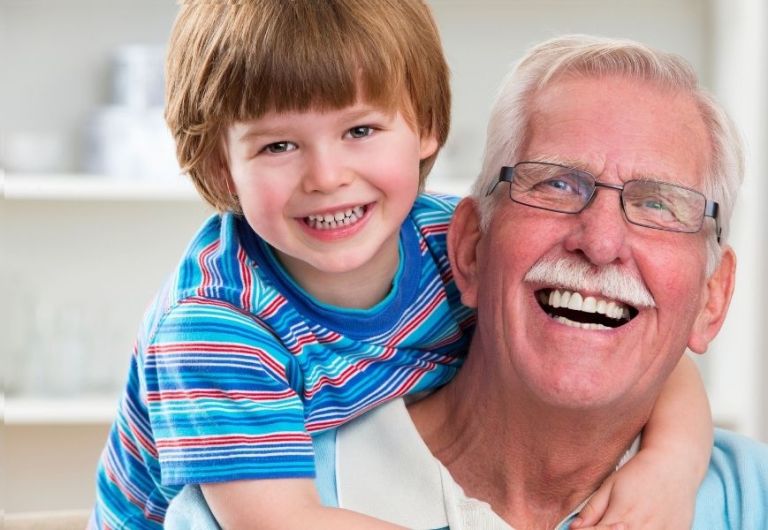
She teaches preschool for Winfield Early Learning Center (WELC) in Winfield, Kansas. Housed in Cumbernauld Village, a local retirement community and nursing home, her inclusive classroom is an inter-generational program that provides preschoolers and residents with multiple daily interactions and serves special education and typically developing preschoolers in a full-day setting.

I have included the link to her presentation. Watch the video of how the seniors interact with the littles. It is truly heartwarming how much impact these littles have had on these senior’s lives and vice versa.

One gentleman talks about how he had decided to give up on living until he started interacting with the school’s students every day. In another story, a child, who hating coming to school and would kick and scream upon getting there in the morning, would change her whole demeanor once interacting with the residents. The more she interacted, the more positive experiences came from it both in the classroom and at home.

Why don’t we focus more time on activities that nurture a young child’s social and emotional skills?

Why aren’t we letting children interact more with our senior population?

Take things off our plates to make room for SEL

Studies have shown that social and emotional skills are just as important as learning math and English. According to Education Week author Marva Hinton, “The programs that look most successful for children are those that are tracking both social-emotional and cognitive, academic learning and using programming in the preschool that’s facilitating both areas at the same time.”

Tabatha spoke about how none of us are born with SEL skills like empathy. These are learned behaviors. People are born with survivor skills, not social and emotional skills. We need to approach this while kids are in preschool. But, teachers are stressed and have a lot on their plates. So do parents. Tabatha advocates that we need to take some things off our plates to incorporate more SEL skills into the academic curriculum.

Check out the “Row, Row, Row your boat” partner activity that she does in her classroom! Amazing!

One important takeaway I had was that this cannot be 100% achieved overnight.  Tabatha shared three things to get us started:

  1. We need to educate ourselves – “Leadership is an activity, not a position.” Share your learnings with your administrators – they will be thankful.
  2. Reflect – the more reflective you are, the more effective you are!
  3. Connect – This seemed most important – “Children who need the most love, ask for it in the most unloving ways.”

Foster family engagement

The other important takeaway that was loud and clear was family engagement and how important it is, now more than ever. Families have lots of questions about how to get their littles more engaged, creating routines, and connecting with schools. Tabatha involves her families by having lots of open communication with them as well as having a monthly family night. It is there where she listens to the family’s needs and shares important coaching skills like daily reading activities and prompt questions to engage in conversation.

Let’s face it, stressors are magnified especially now. Both families and educators need to work together to make the next generation happy, healthy, kind, and high-functioning citizens in our community. Check out ASCD for more presentations like this one, you will not be sorry.

About the author

SEL in pre-school

Annmarie Iascone, k – E-Therapy

Annmarie started her career as a high school English teacher and has spent 20 years in different roles in Education.  Working with companies like Scholastic, Inc and Blackbaud she has always had a passion for making sure students get the services that they need to succeed. As Director of Business Development at E-Therapy, Annmarie works with school partners to make sure their special education teams are equipped with what they need to deliver compensatory services to their students virtually whether it be through providing a remote therapist or licensing out their premiere platform STAR. Schedule a call with Annmarie.

Original Source

Teletherapy Tech Tools: Using Dice or Number Generator Files

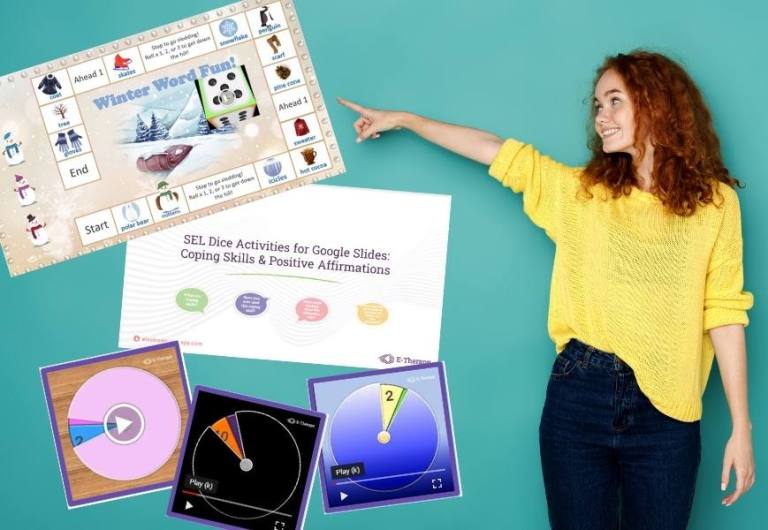
Number generator files are video files that when played or clicked on, resemble flipping dice. The file can be inserted into SeeSaw activities as well as a Google Slide game board or activity. Use flipping dice as an interactive tool for taking turns during online activities. 

Click here to get a copy of the Number Generator Tutorial: Dice Tool for Google Slide Activities. You can copy and paste the pre-made dice into your own activity (see slide 3). If you prefer PowerPoint, see slide 4 to get directions for making number and dice generators video files.

https://www.youtube-nocookie.com/embed/daWW1PkO5Xw?feature=oembed&controls=1&autoplay=1&enablejsapi=1&rel=1

Using video files to create customized dice games

Another effective way to use video files created in PowerPoint is to insert other images or written content on each slide. When you play the video file, it looks like a flipping die. Use it the same way you use printable dice for tabletop games. 

Click for our FREEBIE customized SEL activities for coping skills and positive affirmations activities to see this in action. 

number generator files

Want more activities? Learn how to create your own Green Screen so you can play online games with your teletherapy students.

Original Source

Design a site like this with WordPress.com
Get started