Bullying Prevention Strategies At Your School

One of the toughest challenges facing schools today is how to effectively and proactively address bullying on their campus in order to have a safe and healthy school campus.  

Sadly, bullying is more common than many people realize. In 2019,  22% of students reported that they had been bullied during the school year (School Crime Supplement of the National Crime Victimization Survey, 2019).  That means more than one in five students  are experiencing something that can have far reaching impacts on their mental health and their academic performance. 

So what can schools do to address bullying? Below are three tips to help prevent bullying on your campus. 

Talk About It!

  • Encourage teachers to hold class meetings to really discuss what bullying is, the impacts of bullying, and any bullying behaviors that have been noticed. 
  • Have students talk about bullying on the morning announcements.  Sharing what bullying looks like and how it can feel to the person being bullied is powerful information to share. 
  • Get parents involved by including tips for parents to address bullying at home. 

Focus on Social Emotional Learning skills such as compassion, problem solving, healthy communication, and kindness. 

  • Social emotional learning can help students develop skills that can reduce instances of bullying on campus.  
  • Brainstorm with your class on ways to show kindness as this will increase their participation. 
  • Encourage a “thank you” or kudos wall where students regularly provide compliments and positives about their classmates from the week. 
  • For more information on bringing SEL to your class check out: 

Start a Bullying Committee

  • Create a bullying committee at your school dedicated to stopping bullying in your campus.  This committee can have both staff and student sub-committees.  Consider partnering with community partners and your parent organization. 
  • Some things this committee can work on include:
    • An anti-bullying event at school. 
    • A kindness poster campaign. 
    • Helping incorporate national anti-bullying events or campaigns into your campus. 
    • Developing morning announcements that help develop compassion, kindness, empathy, and healthy communication skills.

While bullying can feel like a huge challenge for a school, there are countless ways you can start proactively stomping out bullying on your campus.  Just remember to get creative, make it a priority, and don’t stop talking about it!

Original Source

Free Wordless Picture Books Activities And Bitmoji Room

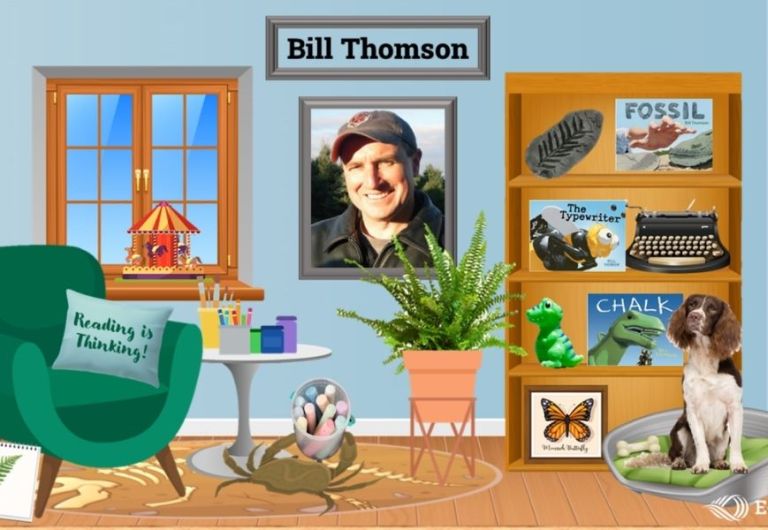
E-Therapy has you covered for ELA, Speech & Language, and SEL activities for Reading Month! If you have never used wordless picture books for either virtual or onsite instruction, check out our brand new comprehensive lesson unit with a free bitmoji room about the author, Bill Thomson.

His gorgeous picture books, Fossil, The Typewriter, and Chalk are ideal for teaching and practicing higher level thinking skills, comprehension strategies, learning about point of view, and reading like a writer.https://www.youtube-nocookie.com/embed/315n-1GT7d8?feature=oembed&controls=1&autoplay=1&enablejsapi=1&rel=1

The Bill Thomson Author Study Unit includes free wordless picture books activities made especially for Reading Month! Get your virtual room in Google Slides and a 21-page Bill Thomson Author Study Activity Guide (PDF) which walks you through a multitude of engaing activities to share with students via teletherapy or virtual classrooms.

The pages in the activity guide provide ELA, Speech & Language, and SEL activities that connect to each of the 17 links in the Bill Thomson Virtual Room. These lessons are appropriate for second through middle school but may also be appropriate for other age groups depending on how the resources are used.

The Bill Thomson Author Study Unit includes links that address multiple instructional goals including the following:

ELA and Speech & Language

  • Description skills
  • Oral discussion and turn-taking
  • Verbal and written story re-telling
  • Comprehension strategies
    • Asking and answering WH-Questions
    • Connections between books and characters
    • Identifying text organization
  • Higher Level thinking skills
    • Making inferences and responding to inferential questions
    • Synthesizing and identifying possible themes
  • Point of View
  • Compare and contrast
  • Sequencing
  • Using text to show evidence or back up thinking

SEL

  • Using facial expressions and body language to predict or infer character feelings.
  • Discuss how characters respond to stressful, unpredictable, or surprising situations.
  • Using drawing and doodling as grounding activities.
  • Practice active listening.
  • Describing or sharing personal experiences that compare or contrast with characters.
  • Practice empathy by taking the perspective of characters.
  • Creating verbal and written messages of caring
  • Pet therapy and pet discussions
  • Using sounds, music, and visual arts for relaxation and reducing stress.
  • Gratitude journaling
  • Yoga and meditation

Get your free resources

Click here for your free Bill Thomson Author Study Virtual Room Google Slide
Click here for your free Bill Thomson Author Study Activity Guide

Get more DIY activities from E-Therapy

Subscribe to E-Therapy’s YouTube channel. Hit the bell to be notified when we upload instructional videos for new activities!

Wordless Picture Books Activities

Original Source

What to Know About Wellness?

Simply put, Wellness is the practice of engaging in healthy habits on a daily basis.

It’s not just about activities, it’s about a lifestyle.

  • It is subjective; wellness can look a bit different for different people.  
  • Trial and error to determine what works for you is important.

The following are key areas of one’s lifestyle that are considered key dimensions of overall wellness:

  • Social Connectedness
  • Exercise
  • Nutrition
  • Sleep
  • Mindfulness

The key to incorporating Wellness into your life is to implement small, incremental changes in each area above and focus on one day at a time.  Daily practice, no matter how long, is what’s important.

Benefits of incorporating daily wellness initiatives into one’s lifestyle include:

  • Stress reduction
  • Improved physical, mental, and emotional health
  • Increased energy
  • Lower risk of disease and illness
  • Increased productivity
  • Improved relationships
  • Increased focus

Original Source

Anxiety Awareness for Administrators and Teachers

Among many changing climates among schools and administrators, it’s important to recognize when you need to take a break. Because the signs and symptoms of anxiety can vary greatly, we want to give you a go-to mental checklist to be able to work through when feelings come up while doing the important job that you do. 

Anxiety likely isn’t the root of the problem, making it all that more important to recognize that it’s a response to your reality. What is really going on? Where are these feelings coming from? Are you being pushed at work? Are you dealing with challenging students? Do you feel like you can’t do enough in a day? Likely each administrator and teacher has experienced thoughts and feelings of anxiety at some point in their career. 

Is it normal?

Yes! Even Dr. Gene Beresin says “experiencing anxiety is normal,” and explains that “a certain amount of anxiety can even be helpful.” While we are not encouraging you to feel this way, allowing the anxiety that may come up to be a catalyst for change and for reflection is a positive way to address the feelings that arise. Plus, you are not alone! Nearly one in five Americans over 18 experience anxiety.

How do you recognize it?

Often anxiety is characterized by feelings of dread, lessened self worth, fear or worry about yourself, loved ones or career, physical symptoms such as a racing heart or difficulty concentrating or even sleep problems. Sometimes symptoms appear as a result of a traumatic event, challenge at work, or may slowly appear over time. 

How do you deal with it?

There are many at-home and personal solutions to help you navigate day-to-day stress and anxiety. We’ve detailed some of our favorite ways of dealing with overwhelm and anxiety and want to share them here for you to take what you need. Here’s a good list to keep handy:

  • Yoga
  • Get a massage
  • Take 10
  • Eat something yummy
  • Three deep breaths
  • Do your best
  • Take a walk
  • Jam out
  • Mantras
  • Exercise
Among our favorite stress relieving tactics are meditation & mindfulness, by simply taking a moment out of your day to refocus and recenter can be a huge help to diminishing tough feelings. By breathing deeply and coming back to your body, often it signals to our brain to relax. Taking a moment to pay attention to ourselves is a long trusted method of calming down when we are in a worrisome moment. 

Original Source

October Activity Round Up

Welcome fall! The leaves are beginning to change colors and the temperatures are cooling off, but here at E-Therapy, we’re just warming up with our newest fall FREEBIE material releases. 

October Calendar of Activities

Our monthly national day calendars always come filled with links to activities for each and every day of the month and our October National Day Calendar follows suit. October offers a fun mix of appreciation days, holidays, and just plain fun days to celebrate. So why not check out all of the great links that you can use as warm-up activities or as the theme for the day in your therapy sessions. 

Halloween Dress Up Pets! Jamboard Activity

Dress Up Pets are ready for trick or treat! Dress up Cat, Puppy, and Sloth in different Halloween costumes including a pirate, a wizard, and a spider. This drag and drop Jamboard activity promotes expressive language skills and can be used for teletherapy and onsite settings. Grab this fun and adorable Halloween Dress Up Pets! activity now!

Halloween Virtual Sticker Scene

Your students will love using Jamboard’s drag and drop feature to place the virtual Halloween stickers in this haunted house scene. Our E-Therapy virtual sticker scenes are perfect for remote or in-person therapy sessions to target a large variety of goals or can be used as a reinforcing activity. Check out our Halloween Sticker Scene today!

Drag and Drop Jamboard Puzzles: Fall Theme

Drag and drop puzzle pieces into a square to create a fall theme picture. Double check—are the pieces in the right spots? What did you make a picture of? What do you notice? These puzzles are most appropriate for students in 2nd through 4th grade and are great open-ended activities to promote visual-perceptual skills, receptive and expressive language skills, and articulation carryover. These Fall-Theme Jamboard puzzles can be used in teletherapy and with iPads using the Jamboard app.

Spooky Scene Bitmoji Virtual Classroom

If you’ve been following E-Therapy for awhile, you may have seen our Spooky Scene Bitmoji room last fall which is preloaded with tons of interactive therapy links that you can use in your remote or in-person therapy sessions. We’ve made a few link updates to the room for this Halloween season, so be sure to check it out!

October Daily Digital Planner

This PDF October Digital Planner was designed for use in teletherapy and onsite session planning. Sections include tabs for a yearly calendar, an October 2021 calendar, Daily Reminders checklists, Lesson Plans, and Resource links to aid in planning therapy sessions. When using this hyperlinked PDF on the computer, Adobe Reader is recommended to ensure that the hyperlinks continue to be live. If you plan on using this planner with an iPad, a paid app such as Goodnotes is recommended. If you already use a paid Adobe Pro subscription, you can use the Adobe Reader app on your iPad to edit your planner and the notations will save from your iPad and opened using Adobe Pro on your computer. Using a digital pencil or a stylus will also be helpful but not required. If you are using OneNote, keep in mind that the hyperlinks will no longer be live. 

Get monthly activities to use in your online therapy sessions 

Check out our monthly Activity Round-ups for even more fun online games and activities that can easily be used in your online teletherapy sessions.

Original Source

Our Founder, Featured on Principal Center Radio

Our founder, Diana Parafiniuk, shares her story on Principal Center Radio.

She had a wonderful time getting to know others in the industry, and talking about all the great things E-Therapy does- from direct services to mental health programs. Having started this company 12+ years ago, Diana set out to find a solution and be able to offer therapy services to kids and students wherever they were.

Tune in today! https://bit.ly/3kqgIsK

“I am grateful to share with you the story that brought E-Therapy into being, and that changed my life, thousands of E-Therapists’ lives, and the tens of thousands of countless students in schools across the United States.” – Diana Parafiniuk

Original Source

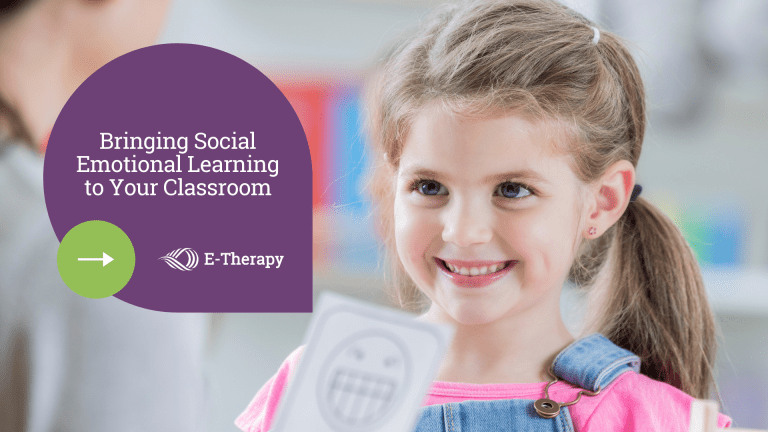
Bringing Social Emotional Learning to Your Classroom

What is SEL?

Social Emotional Learning (SEL) has been in the educational spotlight for the last few years.  The benefits of SEL for students make it more than just an educational trend. However, as a teacher, with a jam-packed schedule, you may be wondering how to connect SEL to academic learning. 

SEL is the process in which children and adults acquire and effectively apply the knowledge, attitudes and skills necessary to understand and manage emotions, set and achieve positive goals, feel and show empathy for others, establish and maintain positive relationships, and make responsible decisions.SEL Is broken down into 5 domains which include self-awareness, self-management, social awareness, relationship skills, and responsible decision making. 

For more information on SEL and its benefits check out: https://www.electronic-therapy.com/blog/introduction-to-social-and-emotional-learning-sel/

Bringing SEL to School

You may be asking yourself “how am I supposed to add something that important to my classroom with all of the other requirements?” 

Even without a formal SEL curriculum and a dedicated time for SEL, you can easily infuse some core concepts into academic learning using these 3 tips: Focus on Feelings, Develop Empathy, SEL Journaling.  These tips can be adapted for any grade and fit nicely into already established lessons and activities. 

Focus on Feelings:

Helping students expand their feeling vocabulary is one of the most important aspects of SEL for both self-awareness and social awareness.   

  • Encourage students to identify and then define feeling words as they are used in stories, news articles, and other learning material.  This can be a great introduction to using a dictionary and/or thesaurus. 
  • Showcase a feeling chart in the classroom and encourage students to share how a particular activity, story, or lesson makes them feel. 
  • For older students, help expand feeling vocabulary.  
    • instead of sad, students could learn about feeling forlorn, desolate, or sullen. 
    • Having students look  within writing materials for more advanced synonyms and antonyms for common feeling words.  

Developing Empathy:

Being able to put yourself in another person’s shoes to understand their perspective including thoughts and feelings is a crucial life skill.   Helping students to develop this skill can be as easy as raising their awareness of others using questions and assignments.  Some examples include:

  • Defining empathy.  Then having students compare and contrast empathy and sympathy. 
  • Infusing empathy into ELA lessons by: 
    • Guiding students to identify the feelings and thoughts of all of the main characters. 
    • Encouraging students to tell the story from the viewpoint of another character.  
  • Asking empathy-based questions in history and social students.  For example:
    • What a student their age would have experienced in a specific time period or during an event
    • What feelings would a main historical figure have experienced? 

SEL Journal Topics:

If you are like many other teachers across the country, you already may have your students regularly practice writing through ongoing journaling assignments.  Incorporating some SEL-focused journal topics is a great way to merge SEL education with academic learning to help students contemplate, learn, and benefit from SEL skills. 

Here are a few journal topics to get you and your students started:

  • Using a new feeling vocabulary word, journal on how that feeling can impact you throughout a typical day using specific examples.
  • Using a new feeling vocabulary word, journal on how that feeling can impact you throughout a typical day using specific example
  • Write about a time your values were at odds with your peers and how this impacted your choices.  
  • What do you do to motivate yourself when you are feeling unmotivated?
  • What is something you used to not like that you are now grateful for?
  • Tell about a time you showed compassion to someone. 

These are just a few of the many ways that you can begin to incorporate SEL skills into your classroom in a manageable and fun way while enhancing the lessons you are already teaching.  The great thing about SEL is that you can be as creative as you want to help your students develop these skills. 

Original Source

Practical Tips For Setting IEP Goals for Your Special Education Students

By Diana Parafiniuk, M.S., CCC-SLP, Co-Founder/Chief Marketing Officer

As a Special Education Teacher, it is mandatory to set appropriate goals on your Individualized Education Program (IEP for short) annually. Appropriately setting well thought out goals on the IEP allows students with any disability to achieve success, growth, and increase positive behaviors. By tracking progress accurately, you can make sure success is happening.

Overall, we know that this can be a daunting task; you have to know the student’s baseline, make sure to understand how the student learns and processes new information, accurately progress and monitor the goals over time, and then determine if the student has mastered their goal. It takes a team to set these goals, including getting additional input from the parents, principal, therapists, school nurse, and support staff, for example.

Each student’s IEP is unique and lays out the roadmap for their education journey, providing support, modifications, and accommodations that allow the student to achieve the most success possible in the school setting. 

Goal mastery changes year to year. IEP goals are vital to a student’s growth and success. Special Education students are mandated under their IEP to address goals specific to their disability needs, abilities, and behaviors. Your student’s road to success will be directed by your daily instruction based on your IEP goals.

Here we lay out some thoughtful and helpful tips to move forward with drafting an IEP. 

Use Parent Input When Possible

Before you draft your initial IEP goals for each student, it is imperative that you include a case history review or interview with the student’s parents. The parent plays one of the most vital roles in their child’s education, and understanding the parent’s concerns regarding their student’s needs, helps to set achievable goals for the future growth of their child. Providing opportunities for the parent to communicate to you, regarding their overall thoughts on the challenges their student’s are experiencing, will offer more information for you as a teacher. 

Parents are, by law, required to be an equal partner in their child’s IEP. Not only can they provide insight, but they can help collect valuable information along the way, as their student works on their IEP goals.

We hope that each parent is an advocate for their child, wanting to attend parent meetings to discuss their child’s IEP throughout the school year, however, some parents might be unavailable to participate in the ways that we would like. Involved parents can help you better understand the student’s strengths, challenges, weaknesses, and overall learning style.

Use the parents as a tool to set up an IEP that creates measurable and attainable goals. Parents can be key when developing successful IEP goals for that particular student. 

Use SMART IEP Goals

The SMART acronym is short for Specific, Measurable, Attainable, Results-Oriented, and Time-Bound.

setting IEP goals

Provide goals that are very specific to a subject or skill. If these points are not considered, a goal will be easily failed, as it does not provide enough detail.

Every goal should be measurable; start with a data chart, curriculum, or tests to help measure progress.

Attainable is one of the most important goals since it can help increase independence in your students. It can also discourage students from completing them if the goal is not clearly laid out and realistic.

Results-oriented can start small, so the student can easily meet their goal and build upon that as they progress.

Finally, Time-bound, set these goals for the week, month, three months, and so on. Setting the endpoint gives the student a time frame and targets to achieve. It is also essential to make sure that your IEP is set to curriculum standards within your state.

Use Resources to Help Plan 

In addition to setting appropriate goals for your student’s IEP, it is important to help use resources to guide your process. State Standards and regulations may change, so not only are you responsible for knowing what the student needs, you are responsible for implementing these standards into each IEP goal.

Take the extra step by setting up a resource binder (or an online file folder) filled with articles, a goal bank to build from, lesson plans, state standards, and more. References and tools will help guide you to better manage your classroom and communication with your student, their parents, and appropriate administration.

Here is a list of our trusted resources that can help you when planning. 

These are just a few resources and ideas to help get you started and guide you on creating successful individualized IEP goals for your students. Creating and cultivating relationships with your students and parents play a vital role in the educational progress of each student. The best piece of advice is to keep up with state standards and regulations for your school district. Please visit our E-Therapy Empower Blog. To speak with our E-Therapy directly, call us at (800)330-0093.

Source

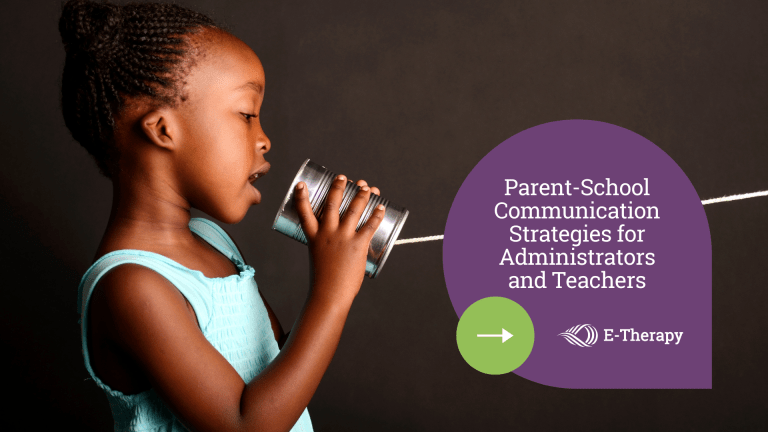
Parent-School Communication Strategies for Administrators and Teachers

Strong, clear, and timely communication between parents and schools is often linked to improved family involvement with the school and may help facilitate increased student achievement. 

How can you meet everyone where they are?

Information exchanges need to include both low- and high- tech strategies. Schools should never assume that all families have effective or consistent internet access, or that they communicate primarily in English. Administrators play a pivotal role in creating a school culture where parent communication is valued and the time and resources needed are consistently allocated to implement a comprehensive communication plan. 

Some tips and tricks:

  • The beginning of the school year, end of a semester, or after holiday breaks are great times to ensure that families have access to copies of student handbooks and discipline policies and that teachers understand communication expectations.
  • Be honest and efficient – sticking to the point, offering help and support, and lending a listening ear are all great ways to stay on the best side of the conversation with parents.
  • Effective procedures and systems for communicating with parents during remote learning is as critical as it is with in-person instruction so remember that we are all at different stages of going “back to normal”.
  • Using E-Therapy’s School-Home Communication Checklist for Teachers and Administrators can be a useful tool in starting a staff discussion, planning school or district policy, and/or tweaking current parent communication systems. 

One quick note:

Documentation of all parent contacts needs to be stressed with teachers. The time required for the staff members to complete parent phone calls along with documenting these attempts needs to be acknowledged by the leadership.

At E-Therapy, we truly are the teletherapy experts and know the power of communicating effectively with families in the virtual instructional environment. Do you need help with strategies? One of our expert therapists can equip you with resources and tools to take on tough conversations, and relax when the going gets tough. Learn more about our eQUIP program here.

Original Source

Managing Challenging Student Behavior

When you think of managing student behavior we’re guessing that these words sometimes come to mind: challenging, disorganized, intimidating. It’s E-Therapy’s hope that we can help you change the narrative so that words like easy, communication and hopeful begin to replace the latter. 

We recognize that life is all about balance, and that as leaders within your school organization it’s important to maintain your composure and quickly de-escalate challenging behavior. We’ve compiled a list of our five favorite tips and tricks so that when all else fails, you can remember that you have go-to methods that you can count on one hand. 

Read between the lines.

Remember that behavior is a form of communication, so it’s up to you as a leader and teacher to really dive deep and attempt to understand what the student is trying to say, perhaps without words at all. 

Over the years, and through an extensive amount of research and education, E-Therapy has gathered tools along the way that have helped schools, administrators, directors and teachers overcome some common communication barriers. When a difficult situation arises with a student, bear in mind that much of what they want to tell you is communicated through their body language. Some common functions of behavior are to seek attention or to avoid something. Is there some indicator within this behavior that might help you identify how to help?

Know who is in your corner.

You are likely not alone as an administrator or leader in your school when dealing with communication and behavioral issues among your student body. While it doesn’t make the issues go away immediately, building a support network of other teachers and administrators (whether in your school, district, or town/city), it’s likely that the others among your network have their own tips and suggestions that you can add to your stock of go-to solutions. 

Educators and administrators across the globe are beyond successful at building communities, so rely on those you’re surrounded with to help you work through the tougher times of leading. At the end of the day, discipline is helping a child solve a problem, so you can approach uneasy conversations and behavior with grace and sympathy.

Create a positive narrative.

Often we assume that students should know the right way to behave, when in fact we haven’t provided them a baseline for what is and isn’t acceptable behavior or communication. Much like raising our own children, we have to explain the expectations we have for those we teach and discipline. 

Most administrators would agree with us that students are inherently good. While they may make decisions based in fear, or act out as a way of needing our attention, students seek our praise and guidance at every step of their educational journey. By having visuals and conversations around what behaviors are and are not acceptable, we prepare them with the tools they need to succeed in the environment we are creating. 

“Be the change you wish to see in the world.”

It’s a priceless quote, and one that we have all heard. Ultimately, it can be a reminder to be a role model. Especially when it comes to dealing with and improving challenging behaviors, emanate the behavior that you are hoping to receive. Being a good role model isn’t just about redirecting when behavior is challenging or disruptive, but about leading and guiding through the process so they begin to take authority and become independent.

Speaking of, we urge you to encourage independence.

Children often thrive on the power they are given, guiding their peers and taking roles such as “team lead” or the like as a way to help manage the classroom or group activities. By encouraging students to model the behavior and actions that add up to a safe and fun learning environment. 

Ideas for establishing this type of classroom or group management are behavior charts, rules, visual lesson plans, reminders posted throughout the room or within assignment details, and don’t be afraid to experiment with allowing your students some freedom to make their own choices.

Original Source

Design a site like this with WordPress.com
Get started