Teletherapy Is A Lifeline For Special Education Students

When it became apparent to the Office of Student Support Services in Sumter School District that the traditional school model would likely not be in place this year, they drafted a “must have” list to guide their search for a teletherapy solution for special education. Angela McLeod, the lead Speech Language Pathologist for the county, wanted a solution that their own staff of therapists could quickly learn and successfully use. It needed to work for speech and language, mental health, occupational and physical therapy, as well as for administering assessments and diagnostics. She wanted technical training and to ensure continued support. And since their therapists were used to face-to-face sessions with students, therapy materials and tools to prepare them for virtual therapy services were also necessary.  

“The team at E-Therapy have not only met those initial lists of must have items but they have exceeded them,” McLeod wrote.

What’s on Your List? Get in Touch So We Can Talk It Through.

E-Therapy: designed to meet student’s needs

E-Therapy is an advanced teletherapy company that provides online services to PreK-12 schools across the United States. Much like Sumter County’s need, brought on by Covid-19, E-Therapy was founded on a need to reach more students.

Travel less, serve more

In the mid-2000s, Diana Parafiniuk, an SLP in Arizona, spent hours each week driving from school to school in rural parts of the state. She knew there was a better way to reach under served students, so in 2009, she founded E-Therapy. Her vision was to help PreK-12 schools remotely access speech and language services using teletherapy. Today, E-Therapy continues that vision of providing the highest quality services and reaching students and schools across the United States.

Schools send out an SOS

Now that many schools have turned to virtual learning, E-Therapy’s teletherapy expertise has provided a lifeline to special education teams striving to ensure their students do not regress or fall behind on their speech and language goals. The company’s account managers provide expansive teletherapy training and access to resources therapists can use to motivate and engage the students they serve. 

“E-Therapy had been a lifesaver for PreK -12th grade students with disabilities receiving speech-language therapy and other related services before the pandemic,” said Parafiniuk. “Now that we find ourselves with a requirement for compensatory time, E-Therapy’s online therapy services are more important than ever.”

Helping school therapists manage compensatory time

E-Therapy developed its newest teletherapy solution, eSMART, as a direct response to Covid-19. It helps school’s SPED teams provide students with compensatory minutes. Efficiencies include session monitoring, detailed data tracking, and Individual Education Program (IEP) reporting.

E-Therapy’s account managers train school-based teams to get virtual sessions up and running quickly. They continue to offer support as the team works to compensate for learning losses their students may have. 

Speech therapists, as well as mental health counselors, have access to a vast library of digital resources. These tools are proven to engage students and provide positive outcomes to advance academic success.

“eSMART meets the needs of special education programs right now,” said Parafiniuk. “Its ease-of-use has revolutionized how speech therapists and school administrators track and monitor their student’s IEP speech session progress. Therapists and administrators can see real-time clinical data that charts student progress at a glance.”

Overcoming the ultimate challenge

Sumter County’s Office of Student Support Services went into this school year feeling like it was going to be the ultimate challenge for their therapy service providers.

“The onboarding, training and support provided to our district has been outstanding,” said Ms. McLeod. “The team at E-Therapy made the transition to teletherapy and virtual learning much smoother for the staff, students, and parents.” 

Need a complete teletherapy solution for your school-based therapists? Or is your school district facing a shortage of therapists? Your unique problems require a unique solution. Let us help. Manage compensatory time with E-Therapy’s help.

Source

Teach Kids EFT Tapping To Manage Anxiety And Stress

So often kids struggle with their emotions and don’t know how to deal with them. They don’t have the tools to process their feelings so they get weighed down by anxiety, stress, and depression with no way to move through them. Luckily, there are techniques that kids can use to help them release emotions. One such technique, Emotional Freedom Techniques (EFT) also known as Tapping, is an easy and fun way to clear negative emotions, ease emotional distress, and release trauma. It’s a simple technique that can help kids enjoy life and experience happiness.

What is EFT Tapping?

EFT is a form of energy medicine based on the ancient Chinese meridians. It has been described as “emotional acupressure.”

By tapping on meridian points on our face and upper body while voicing our emotional issues, it is believed that our energy is re-balanced and we gain relief from emotional distress and anxiety.  By releasing the emotional blocks the child faces, they free their mind and body to work in the most optimal way.

How EFT tapping works

By tapping on your body’s meridians with a fingertip, you stimulate specific energy points that help alleviate the fight or flight (stress) response and re-wire your brain to think more clearly about the problem.

By stimulating these pressure points we bring down the amygdala part of our brain, which controls the part of the brain that is responsible for assessing threats, detecting danger, and producing fear. It is hyperactivated when traumatized resulting in feeling chronic stress, vigilance, fear, irritation, lack of safety, and sleep difficulties.

Tapping helps calm kids and bring their emotions back into balance.

Why tapping is good for kids

Many kids struggle to understand their emotions and get easily overwhelmed. Tapping is an easy, fun way to help students release and experience their emotions.

One great thing about working with kids is that they tend to be more intuitive than adults and more connected to their bodies. As adults we have learned to close off to our emotions and hide our feelings. Children tend to have a more immediate connection their emotions.

Kid’s problems also tend to be less complex with fewer layers as they don’t necessarily have years of traumatic experiences to unravel. This allows children to quickly process and resolve their issues. Sometimes it only takes a single session to experience relief.

Before you begin tapping

  • Develop trust with the child. It is important kids feel safe and comfortable opening up and sharing their feelings.
  • Share with the child that tapping is a special technique that helps their mind and body feel happy and relaxed. Ask if they want to try it. Don’t force them to do it, and let them follow along if they want.
  • Show them the tapping points. Let them know that these are special points that help their body feel calm. Practice tapping on the points so they feel comfortable. For smaller children, practice tapping on a stuffed animal.
  • Question how they are feeling; physically, emotionally, and mentally.
    • Starting with the body, find out if they are tired, sore, or stressed.
    • Then go into their emotional well being – find out if there is anything going on at school or what is bothering or annoying them.
    • Identify the most pressing issue and let that be basis of the tapping process.

It is very important to tap using the child’s exact words. As you progress through the tapping process, you can begin to introduce the underlying issues you identified. To start, make sure the child feels comfortable and reflected.

Let the child know they can use this technique on their own and practice whenever they feel upset.

How to Tap

Step One: Clearly identify the problem

Ask the child to think about their problem. If they are visibly upset, they are already connected to their problem. Let them know that this tapping exercise will help them calm down and be able to think more clearly about their problem.

To identify the problem, follow these steps:

  • Start with what the child is experiencing in the moment.
  • Ask them what they are experiencing physically – “Where do feel this in your body?” Get them to describe it with colors, textures, sensations.
  • Next move onto the emotions. Get them to identify and name the feelings. Do they feel anxious? Sad? Lonely? Scared?
  • What is going on/what events have caused them to experience these feelings. What are the thoughts going through their mind? How is this affecting them mentally?

Step Two: Rate the intensity on a scale of 0-10

  • Ask them “How upset are you about this problem?”
  • If they are very young you can have them use their arms to show a little or a lot.

Step Three: Create the set-up statement

The set-up statement consists of two parts:

1). Naming the fear or the problem – “Even though I feel bad because my friend is angry…”.

2) A statement of acceptance– “I completely and deeply love and accept myself.” If they are young kids here are a few variations that might feel more comfortable:

  • “I know I am a great kid.”
  • “I still like myself.”
  • “I will be OK.”

You use the set-up statement to tap on the Karate Chop point (see below).

An example of a set-up statement is: Even though I have anxiety about school, I know I am a great kid.

Step Four: Develop a tapping script

Using their exact words fill in the following statements:

  • Round 1 – Name the feeling –
    • “All this sadness…”
    • “So much loneliness…, anxiety, etc.”
  • Round 2 – I feel (describe in detail using their words how they feel physically, emotionally, mentally)
  • Round 3 – Acknowledge the problem and end with a positive affirmation – Even though I have (state the problem), I choose to release this sadness, be happy, etc or I am loved, safe, etc.

Step Five: Tap

To tap you start on the “Karate Chop” point using the set-up statement.

Even though I have anxiety about school, I know I am a great kid.

Then go through each point using a reminder phrase.

Use the following tapping points:

https://www.youtube-nocookie.com/embed/BPqGjcxoPS8?feature=oembed&controls=1&autoplay=1&enablejsapi=1&rel=1#038;enablejsapi=1&origin=https://www.electronic-therapy.com” frameborder=”0″ allow=”accelerometer; autoplay; clipboard-write; encrypted-media; gyroscope; picture-in-picture” allowfullscreen>

Karate Chop point

Top of head

Inside of Eyebrows

Side of Eyes

Under Eyes

Under Nose

Chin

Collarbone

Under arm

Example of tapping

  • Karate Chop point –
    • Even though I am anxious about school, I know I am a great kid (repeat 3 times).
  • Top of head –
    • Round 1 – All this anxiety about school…
    • Round 2 – I feel worried that I will fail.
    • Round 3 – Even though I have this fear, I choose to be brave.
  • Inside of Eyebrows –
    • Round 1 – So much fear about school…
    • Round 2 – I feel overwhelmed by so much homework.
    • Round 3 – Even with all this worry, I know I am smart and can succeed.
  • Side of Eyes –
    • Round 1 – All this stress about homework…
    • Round 2 – I feel anxious I will never get it all done.
    • Round 3 – Despite this worry, I believe in myself.
  • Under Eyes –
    • Round 1 – So much fear of failing…
    • Round 2 – I am afraid I will get it wrong.
    • Round 3 – Even if I’m unsure, I choose to have faith.
  • Under Nose –
    • Round 1 – All this worry…
    • Round 2 – I don’t know how I will get it all done.
    • Round 3 – Even though I have this doubt, I know I will figure it out.
  • Chin –
    • Round 1 – All this anxiety…
    • Round 2 – I feel angry there’s so much work.
    • Round 3 – I choose to let my stress go as best I can.
  • Collarbone –
    • Round 1 – So much fear…
    • Round 2 – I am afraid I will fail.
    • Round 3 – Despite this fear, I know it will be okay.
  • Under arm –
    • Round 1 – All this worry…
    • Round 2 – What if I’m not good enough?
    • Round 3 – I know I can do it.

Step Five: Measure the intensity again

After you finish your rounds of tapping, check in to measure the intensity of the child’s feelings on a scale of 0-10.  Hopefully, the intensity has dropped. Your goal is to get to zero.

If they are still at a higher level, ask what is still there or what came up for them during the tapping.

Did they experience anything in their body?

Did they have any new ideas or thoughts?

Did they feel strange or uncomfortable?

Step Six: Do another round of tapping on what came up

Start the process over using their exact words and tapping on the next layer of the issue. Repeat until you get to zero (or a 1 or 2).

With so many students suffering from mental health issues, utilizing the Emotional Freedom Techniques of Tapping is a great way to help children and adults of all ages process and alleviate emotional distress.

Visit our eCALM room

tapping

Our mental health therapists have created a special eCALM room that you can use to focus on YOU! Please visit E-Therapy’s eCALM room for videos and blog posts that can help you manage your own mental health.

Original Source

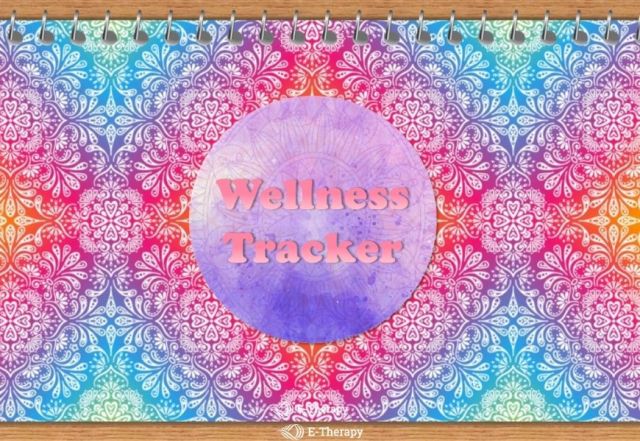
E-Therapy’s Digital Wellness Tracker

The end of the school year is coming fast and we could all use a little self-care. Have you ever used a personal digital planner or journal? Check out E-Therapy’s Digital Wellness Tracker! This colorful tool is easy and fun to use to track

  • Hydration – drink water throughout the day to positively impact your energy levels and keep your brain functioning
  • Gratitude – practice gratitude by writing what you’re grateful for every day. Learn more about how gratitude can help you beat stress.
  • Positive Affirmations – positive self-talk can help you overcome negative thoughts
  • Sleep – Get enough sleep every night to enhance your physical and psychological wellness
  • Heart Map – noticing what would otherwise be considered insignificant develops your appreciation for the world around you

https://www.youtube-nocookie.com/embed/EHr1UqECN4g?feature=oembed&controls=1&autoplay=1&enablejsapi=1&rel=1#038;enablejsapi=1&origin=https://www.electronic-therapy.com” frameborder=”0″ allow=”accelerometer; autoplay; clipboard-write; encrypted-media; gyroscope; picture-in-picture” allowfullscreen>

This tracker is available in a Google Slides version and a PDF version.

The Google Slides version works well on a computer or chromebook. Click on the link below to make your own copy and save it to your drive. Open and use the Google Slides tracker in edit mode and click on the hyperlinked tabs on the right side. Slides have editable text boxes and embedded movable images. 

Get your Wellness Tracker for Google Slides

To use the PDF version, click on the link below for the preview then download the document to your computer. Open the document using Acrobat Reader. Use the tabs to toggle between pages, type in the editable text fields, and click on the check boxes. To add additional annotations, click on the comment icon (looks like a yellow speech bubble) to make the annotation toolbar visible.  The PDF version of the Digital Wellness Tracker can also be used with an iPad using the Acrobat Reader app, which is available free in the app store. 

Get your editable PDF Wellness Tracker – you will see a preview, then you will need to download the PDF to your computer or Drive

Source

ezBELL: E-Therapy’s Newest Feature For Schools

Ring the ezBELL to quickly notify E-Therapy’s staffing manager when you need SLPs, OTs, PTs, or Mental Health professionals.

Have you ever discovered a product or service that you didn’t know you needed? Now, you can’t imagine life without it? Well, it’s here- a feature that schools have been waiting for but didn’t know you needed!

Introducing our new ezBELL!

E-Therapy’s ezBELL is now live on the E-Therapy website, and we couldn’t be more excited to let you in on this little service bell that we designed with you in mind. Our ezBELL is a handy little Chrome extension that will make your life easier when you are in need of our help, services, or even therapists like Speech Language Pathologists or School Counselors. Want to learn more? We will give you all the information you need to get started. 

Ring our ezBELL for immediate teletherapy services!

It came to us one day that we needed a feature on our website that easily allows school personnel to ring our “bell” for immediate assistance or services. So we created an extension that is called the ezBELL to address your last minute teletherapy needs for your school. Your students won’t miss a session when you ring our ezBELL.

We know that during this challenging year that you need a teletherapy company you can rely on, and that is hands down E-Therapy. We provide direct servicescompensatory time serviceslicensing of our platform for assessments and diagnostics, and clinical staff to help you out when you are in a bind. Once the ezBELL is rang on your end – our dedicated team will contact you and help determine what services you need from us. 

It is easy, seamless, and you can tap into our national team of certified clinicians when you need them. Once we determine what services you need, our platform or both- we can set you up in hours through our platform and you will receive instructions on how to download the ezBELL Chrome extension in case you need to ring us again.

The best part is that the ezBELL is completely free and unobtrusive but always just a click away. 

We hope you love it as much as we had fun creating it. Learn more about E-Therapy’s ezBELL for Chrome.

Source

Speech Therapy Games And Calendar: May 2021

We are excited to celebrate Better Hearing and Speech month this May by bringing you original and thoughtfully created speech therapy games and activities for your online sessions. Speech-language pathologists across the country are working harder now than ever to provide excellent services for students, and we are here to make your job a little (or a lot) easier with our FREE teletherapy activities.

May Calendar of Activities

It’s here! Check out our E-Therapy Daily Activity Calendar for May. This is SUCH a time saver for therapists and online educators. Simply download your free copy of the calendar, and you instantly have distance learning activities for every day of the week. This “national day” calendar is great to use as a class warm up, a conversation starter, or to target specific student goals.

speech therapy games

Articulation Jamboard for the R Sound

Our E-Therapists have been having a lot of fun with Jamboards in teletherapy sessions. They are really dynamic, engaging, and free- what’s not to love? We know you love Jamboard activities too, but if you are busy completing progress reports and IEP paperwork, you don’t have much time for creating materials. That’s why we have done the work for you!

Check out our R Jewels Articulation Jamboard. If you have students who need to practice the /r/ sound, this activity is for you! Simply click the link above to make a copy and you are ready for your next session.

speech therapy games

R Picture Reveal PPT Game

As a Speech Therapist, we know you can never have enough articulation activities, especially for targeting the /r/ phoneme. If you are looking to freshen up your /r/ therapy sessions, look no further! Our R Picture Reveal Game helps you to address R in all word positions and even includes word lists that can be used as a progress monitoring tool. This game is a fun and effective way to practice articulation skills that is therapist and student approved!

speech therapy games

Multiple Meaning Words Game

FREE Multiple Meaning Words Game Board! This activity includes two boards with homonyms and two boards that can be customized to suit your student’s particular needs. We have even included 3 black and white print-friendly versions in case you want to print the boards to use with kiddos onsite. These customizable game boards are perfect for use in teletherapy sessions, for sharing in a Google classroom, to send as homework, or in a brick and mortar setting. Click the link above to snag your copy now!

speech therapy games

SEL Positive Affirmations Game

The activities just keep coming. The teletherapy experts at E-Therapy bring you yet another dynamic online activity that is effective and fun. Our SEL Positive Affirmations Game is a motivating way to help students develop positive self talk while targeting a variety of learning goals. This game is great for upper elementary through high school, and no prep work is needed. Simply download the PPT game and go!

speech therapy games

Get monthly Speech Therapy games to use in your online therapy sessions

Check out our monthly Activity Round-ups for even more fun online games and activities that can easily be used in your online teletherapy sessions.

Source

Online Speech Therapy Activities For Poetry Month

We all write poems; it is simply that poets are the ones that write in words.”

~John Fowles

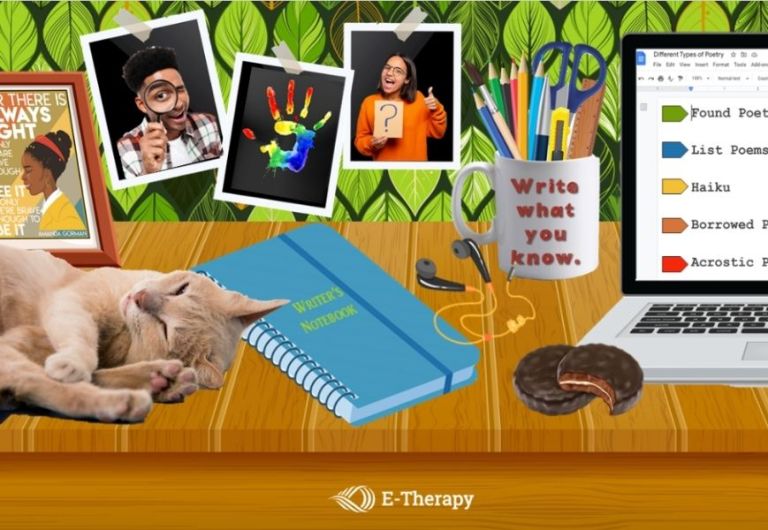
April is Poetry Month! E-Therapy’s expert speech therapist, Diana Martin, has created a comprehensive guide with resources, games and speech therapy activities that are perfect for ELA, Speech and Language, and SEL lessons. Start here with her video overview:https://www.youtube-nocookie.com/embed/7tWkFMmOCrE?feature=oembed&controls=1&autoplay=1&enablejsapi=1&rel=1#038;enablejsapi=1&origin=https://www.electronic-therapy.com” frameborder=”0″ allow=”accelerometer; autoplay; clipboard-write; encrypted-media; gyroscope; picture-in-picture” allowfullscreen>

Do your students moan, groan, and sigh when asked to write a poem? Maybe they say they hate writing altogether. Introducing poetry is a great way to reset their thinking about themselves as writers. Whether you are an SLP, special education teacher, or counselor, poems and poetry writing can support a host of instructional goals.

Poems tend to be shorter, more accessible texts and may appear easier to tackle than a longer selection that students are asked to read, write, or talk about. Modeling your own thinking, writing, and writing process (modeled writing, shared writing) are all important strategies to help your students recognize that as a teacher or therapist, you understand what it is like to struggle with ideas and putting your own thoughts into words. Students benefit from hearing you read poems, talk about poems, and write poems.

Kick off a poetry unit with Immersion

As part of poetry immersion, share the written texts of poems while reading them (shared reading) and make lists of what learners notice. Using the Poetry Unit of Study Virtual Room is a useful tool in this process. This allows students to engage with poetry through a writer’s eye.

In order for students to grow in their poetry discussion, writing, and reading skills, they need to feel safe to take risks. Often students are only told what they did wrong with their writing or what is missing. Putting words down on paper feels very risky if feedback feels negative. Feedback should name and notice a few things that the writer did well and one thing to fix. And when offering a fix, instruct the student how this fix will make their poem stronger.

Poetry immersion also shows students that they can imitate other poets and use their poems as mentor texts, just like great painters learn by imitating master artists.

Using the Poetry Unit of Study Activity Guide includes over 30 links and lesson ideas of moving your students from the immersion process to actually composing their own poetry drafts.

speech therapy activities poetry month

Poetry can be used to teach, practice and/or reinforce the following goal areas:

  • Comprehension strategies
  • Questioning and inferential skills
  • Figurative language (simile, metaphor, personification, idioms)
  • Identifying main idea or themes
  • Purpose of punctuation, white space, line breaks
  • Synonyms
  • Adjectives
  • Nouns
  • Verbs
  • Point of view
  • Articulation skills (words, phrases, sentences, conversation)
  • Fluency techniques such as easy-onset, light contacts, pull-outs, cancellations, pausing, and phrasing.

Get more DIY activities from E-Therapy

Subscribe to E-Therapy’s YouTube channel. Hit the bell to be notified when we upload instructional videos for new activities!

speech therapy activities poetry month

Source

Do Students Respond Well To An Online Speech Therapy Environment?

online speech therapy

Many students receiving Related Services this school year are getting their speech therapy via teletherapyDiana Martin, SLP, became an E-Therapy teletherapist 4 years ago, after spending most of her 32-year speech pathology career providing speech services to children attending brick and mortar schools. We asked her to share her experience as an SLP with students receiving speech therapy online vs. in-person.

Diana, you were a Speech Therapist in schools for 28 years, and a teletherapist for the past 4 years. What is a challenge that you faced as a school-based clinician that you hoped teletherapy would solve?

When I worked in schools, having an ideal on-site location was never guaranteed. My on-site settings ranged from light airy offices with windows and bookshelves to supply closets with no ventilation or proper fire exits. Advocating for my students’ goal progress often started with advocating for an appropriate therapy environment. 

Supply closets? That doesn’t sound like a good space for teaching and concentration.

Not really. Making sure my students received a quality service when working in schools was often challenging and required creativity and deal-making. During the summer months, when my school’s custodians were toiling in the heat to clean the building and classrooms, I would visit the school and scrounge for chairs and kidney-shaped tables. I knew that a better therapy room set-up meant increased student engagement and higher-quality sessions. And high-quality sessions meant increasing the likelihood that kids would show stronger progress. 

Then, one would expect that online sessions would eliminate that challenge.

Providing an adequate on-site therapy setting for my speech students was often no less challenging than providing an adequate online therapy setting. Well-designed therapy rooms, both on-site and online, acted like an assistant that I could count on to help with behavior management, pacing, and session success.

With the need for physical distancing in the classroom, I think many teachers have discovered how important the environment is for classroom management, etc. What do you suggest to teletherapists when setting up an online environment?

When visualizing an online therapy environment, think of your web conferencing app or therapy platform as the tool or furniture you use to sit and interact with a student. The web-based activities and materials you use act as your on-site bookshelf of games and toys. In both settings, the interactions between the child and therapist are the focus. 

The BIG question that school-based SLPs, teachers, and parents want answered is:  Do speech therapy students do well in an online environment?

In my personal experience, students I served in an online speech therapy setting made comparable and sometimes better progress than my on-site students.

Besides the environment, what do you think influences success?

I observed better attendance among teletherapy students. Since student therapy schedules doesn’t conflict with other classes, recess, or school assemblies, time isn’t lost searching for and fetching students.

And I want to go back to the teletherapy setting for a minute because it is such an issue in school settings.

When you are a teletherapist, there is no more take-what-you-can-get that you find in a school-based setting! As a telepractioner, I had increased control over the therapeutic environment. The room I used in my home to conduct teletherapy was dedicated to that purpose.

I was seldom able to control background noise in the school settings I worked in. This proved to be a distraction for many students receiving therapy. Most of my online students wear a headset which decreases background noise and aides them in their concentration and focus. In my dedicated teletherapy space at home, I had control over the lighting and the heat, which also kept me more comfortable.

Another big concern we hear from school-based SLPs is about the materials. Are you limited with what you can use online compared to in-person sessions? 

Not at all. Because of the web-based nature of teletherapy, I was able to quickly toggle between flashcards, online games, videos, and books. These materials helped increase the attention and response opportunities for my students.

How did communication with the adult caregivers in the student’s life change? Did you find that parents were more responsive due to the convenience of online sessions?

Absolutely! I was able to spend more time modeling and communicating with parents online than I did as a school-based SLP. As caregivers participated more actively as therapy partners, they quickly learned that speech therapy wasn’t like being tapped by a magic wand. Speech therapy required hard work from the child, the SLP, and the caregiver. Parents also experienced how the SLP responded to their child’s learning frustrations by providing supports that fostered a feeling of success. And even more important were opportunities for parents to witness their child’s learning candle catch fire. The emotions on the faces of my students and their caregivers during those electric moments and the bond that formed between us was tangible, even through a webcam. 

Thank you for speaking to us, Diana!

You are welcome. Anytime!

Source

Three Worth-It Online Courses For Occupational Therapists.

Summer is a great time to catch up on professional development. Three of E-Therapy’s Occupational Therapists share online courses they are taking this summer that teach them up-to-date research and strategies they can use with their kids next school year. 

Primary motor reflex patterns

Jasmine JJ Erazmus OTR/L is currently doing the Musgatova Reflex Integration (MNRI) foundational online class titled Dynamic and Postural Reflex Integration

“It is having me think of common difficulties such as emotional regulation, attention, visual, postural endurance and whole-body-movement skills in a whole new way! I can’t wait to come back with many updates to my practice as an occupational therapist!”

Sensory integration strategy

occupational therapists share online courses
photo by S. Oosterhouse

This summer, Sarah Oosterhouse, PTA, MS, OTR,  participated in an online course called The Alert Program. “This is a sensory integration strategy used to help kids with self-regulation. It was really good and has given me more tools to help my students with their sensory struggles!”

Presenters Mary Sue Williams OTR and Sherry Shellenberger OTR take you through the process of how to assess a child’s sensory processing abilities as well as your own. The program uses the analogy of a car’s engine to teach the student how to help regulate it to the “just right” level. How Does Your Engine Run: A Leader’s Guide For The Alert Program For Self-Regulation explains the theory, along with step-by-step instructions and easy-to-implement activities. 

“We all have sensory “issues” of some sort.”  Oosterhouse says, “Adults have usually adapted to them or are more subtle in the ways that we regulate the environmental stimuli coming at us. Kids can be guided in how to identify and regulate their own sensory systems to achieve their optimal level of function.”

A-Z school-based occupational therapist course 

Sophia Moiz, OTR/L is taking a 4-week occupational therapist course called A-Z School-Based OT Course presented by Jayson Davies, an OTR and podcaster based in California.

“I really enjoy learning about occupational therapy in different states, and it is an excellent course. It’s great to hear from OTs in different parts of the country,” says Moiz. “Although the course focuses on the brick and mortar school setting it is still very informative (and given the Covid situation, many participants have lots  of questions re: teletherapy!). When you work from home, it is really nice to have a group of school-based OTs to share ideas with, to improve our professional skills, and to continue developing effective treatment plans with students.”

Earn PDUs with E-Therapy’s On-Demand Webinars

In the first of several on-demand webinars, E-Therapy, in partnership with AESA, offers The Ultimate Guide to Get Your School’s Teletherapy Program Up and Running, Both Securely and Seamlessly! This webinar explains how to use the E-Therapy online teletherapy solution to keep your SPED program running, no matter where you or your students are located. It’s a must see for any school programs that need support making the transition to online SPED Services. 

Source

5 Tips For Practicing Presence

practicing presence

In our Voices series, this month, in honor of Take Your Dog To Work Day (June 26th), we have a special blog submission from author and leader, Katy McQuaid. She brings us tips on practicing presence with an assist from your best friend, your dog.

How would your world change if you allowed yourself to be fully present in each moment? Dogs are naturally present as they experience the world around them, and they can be great teachers for us humans!

Grace the fluffy dog shares five tips parents and kids can use to practice presence

  1. When you eat, really enjoy your food. (And know it’s okay if you don’t want to share.)
  2. When you walk outside, lift your head, and breathe through your nose. That’s the best way to smell all the sniffs in the air. REALLY breathe it in, all the way into your belly.
  3. Notice EVERYTHING. Be present where you are, and take in everything there is to see.
  4. When you’re free to dig, dig deep and wide. Enjoy the dirt on your paws!
  5. When a person you love speaks, perk up your ears, and smile!

Practicing presence is one of the best gifts a parent can give their child. Through being present a child knows they’re seen, and that they’re being heard. Grace reminds parents to take an extra minute or two to be with your child, so they will feel that you care, that somebody is listening, and somebody notices. Grace recommends just looking kids in their eyes, and of course, looking straight down into their heart. That is the gift of presence.

Want more from Katy and Grace the Dog? Check out Fun Indoor Activities To Do With Children And Their Pets.

practicing presence

Author and leadership consultant Katy McQuaid spent more than three decades in the CIA, including 12 years living abroad. Her work in communities all over the world and the endearing, unconditional love of her four-legged muse, Grace, inspired her to write the “Everybody Loves Grace” series of illustrated books. Parents, kids of all ages, executives, and organizational leaders hail the series as a beacon of hope and inspiration for anyone navigating change or challenging circumstances. Learn more at www.EverybodyLovesGrace.com.

source

Teletherapy Then Vs. Now

teletherapy

Just a decade ago, teletherapy was virtually unheard of. Speech therapists, as well as physical and occupational therapists, served students in a strictly on-site environment – never thinking that the technology that was flooding into schools across the nation would be useful to them. 

As we know, times have changed. So has the demand for how we use technology to connect with others. When I started E-Therapy in 2009, I never imagined that we would be in a pandemic in 2020 and online in everything we do. Back then, my desire to serve twice as many students daily was important because, due to extensive travel, I only could see a handful of students each day. So much time was lost due to commuting because I spent hours in my car to reach students in rural Arizona schools.

Getting students served on a consistent basis was the motivating force to create E-Therapy, a company that would provide Related Services to districts, schools, and school children with special needs.

Here we are, ready to begin 2021, and our teletherapy platform is more relevant than ever before. 

Pioneering a new special education delivery model

Teletherapy was such a new concept that it wasn’t even on anyone’s radar. At the time of E-Therapy’s inception, reliable platforms were virtually non-existent. Sure there were nascent learning management (LMS) systems, but nothing that could perform at the level and care that we needed them to perform. These platforms were not regulated for state standards or even HIPAA compliance. They could not even do the basics, stream a video, or screenshare simultaneously.

Most of the world had not heard about teletherapy, especially within the education sector. No one knew how it needed to be structured and implemented within schools.  Facetime hadn’t even been invented. Live streaming was not a part of everyday life. Can you imagine? Sometimes it makes you wonder how we lived without these services- since it is so prevalent in our lives now. 

So I found people smarter than myself, and we started from scratch. I knew what I needed. I knew what other SLPs needed. That was the blueprint we used to build a solution.

E-Therapy had to prove that it had the goods

Many educators and school districts needed convincing that online video conference therapy sessions would work for their districts and schools. Educators are not naturally early adopters and prefer a system that has been proven. We had to show Special Education Directors that E-Therapy could provide a therapy service and platform equipped with the tools they needed.

Real-time data to support a student’s education plan

Some of administrators primary program needs include student session monitoring and tracking. We had the challenge, in the early days, of developing organizational tools internally. Our team spent many hours researching best practices and created our own bank of knowledge. These early tools have evolved into a comprehensive session tracking and delivery system within the STAR Teletherapy Platform that supports data collection required for all schools – particularly this pandemic year of 2020-21.

We made sure to include these essentials in our related services solution:

  • Manages therapy scheduling
  • Charts clinical data notes/documents for each individual student
  • Graphs visualizations of evidence-based information towards student success
  • Provides administration oversight of all related services in real-time
  • Monitors real-time student/therapy session progress based on therapist clinical data entry

Tele-assessments to develop therapy goals

Assessments, evaluations, and testing diagnostics have always had a place. Today’s schools need to ensure that they can do testing and evaluations to serve their student needs in a safe environment during the pandemic.

E-Therapy has an extensive library of assessments for special education eligibility and programming. Our nationwide team of clinical therapists and school psychologists utilize evidence-based assessment measures to evaluate students’ strengths and needs. We provide face-to-face, live “tele-assessments” utilizing telepractice procedures that are HIPAA compliant.

We offer most any assessment that your students require in any of the areas or focus needed. Our therapists collaborate with the IEP team to determine each student’s unique needs. We work to develop appropriate therapy goals to help your students be successful in reaching their full potential. 

Training therapists to become expert E-Therapists

After months of research and development in 2009, we created one of the first virtual teletherapy platforms. We developed a system that could help provide the services that schools needed. 

But we knew that there was no training or webinars on how to complete online services for schools. How could school-based clinicians in speech therapy, occupational therapy, mental and behavioral health, and physical therapy become expert E-Therapists?

E-Therapy offers online resources, tools, webinars, and live tutorials to make it easier for your therapists to ramp up quickly. We train teachers, therapists, students, and administrators to use our private online therapy rooms, as well as our HIPAA compliant, proprietary Session Tracking and Reporting System (STAR) Platform. 

Today we are proud to say that E-Therapy and our STAR Platform are trusted names in school districts across the United States. We have therapists that have years of experience and knowledge that helped us create a cutting-edge system that schools trust and rave about. 

Now have you tried E-Therapy’s services in your school? 

teletherapy

Source

Design a site like this with WordPress.com
Get started